UK Aid Backs African innovators to expand clean cooking solutions
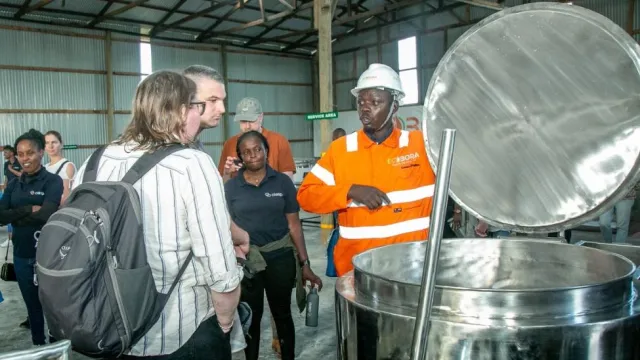
Ecobora Operations Manager Erastus Ong'era explains the workings of a solar-powered cookstove to partners of the UK-Aid funded Modern Cooking Services (MECS) programme at the Ecobora factory in Kajiado
At a critical moment for climate, health, and economic development, three innovative clean cooking ventures have secured investment to scale affordable solutions across Africa.
The investment, led by the UK aid (FCDO) funded Modern Energy Cooking Services (MECS) programme, will support Ecobora, PowerUp, and Sun-Power Box to advance electric cooking technologies and expand access to clean, modern energy.
Related
BURN ignites change with Sh1.5 billion green bond for clean cooking
Why KOKO Networks' clean cooking fuel flame went off
Bridging the investment gap in clean cooking
More than 600 million people in sub-Saharan Africa still rely on wood, charcoal, or other biomass fuels for cooking, driving deforestation, harming health, and placing a heavy economic burden on households and institutions.
While electric cooking (e-cooking) offers a clear pathway to cleaner, more efficient energy use, early-stage ventures face a critical financing gap. Many struggle to access the capital needed to move from market entry to scale.
This investment directly addresses that gap. By funding research, testing, and validation, MECS is helping these companies strengthen their technologies, generate evidence, attract new investments, and reach scale.
New model for scaling clean cooking
The investment signals a shift in how clean cooking is financed, de-risking innovation at an early stage to unlock larger-scale capital. It builds on growing momentum in the sector, including a recent partnership between the Government of Makueni County in Kenya and CLASP, which committed to accelerating Kenyan institutions’ transition to clean cooking.
Nyamolo Abagi, Director of Clean Energy Access at CLASP and member of the MECS Investment Committee, said: “The MECS Investment Committee is pleased to support these three trail-blazing ventures. All three companies demonstrated potential to scale up their businesses and make significant strides in accelerating the adoption of clean cooking technologies across Africa.”
MECS R&D venture building support
Over the next year, this R&D venture building support will focus on product testing and validation, alongside market access, financial, and policy research. Critically, the findings will build the evidence base that the wider clean cooking sector, and prospective investors, need to move with confidence.
Professor Rachel Kyte, UK Special Representative for Climate, remarks on the significance of this investment decision: “Clean cooking technologies transform lives and protect the planet by improving health, generating jobs, and avoiding deforestation. Innovative UK-African partnerships advancing viable and affordable electric cooking solutions are more important than ever at a time of price shocks and supply disruption for LPG and other fossil fuels. Supporting these three pioneering firms is part of our modern approach to development and helps move the world one step closer to universal clean cooking.”
Why this matters now
The clean cooking sector is entering a decisive period. Governments want to deliver on climate, energy access, and health goals, and investors are looking for scalable solutions with real-world impact.
MECS’ investment is a clear signal that clean cooking is a viable and investable opportunity. However, increased capital, innovative finance models, and partnerships are needed to fully unlock it and support the innovators at the forefront of the transition.
MECS invites impact investors, development finance institutions, and technology partners to engage with these ventures and explore how their capital can help accelerate the clean cooking transition across Africa.