Treasury denies bond payment delays, cites ‘standard’ overdraft use

National Treasury Principal Secretary Dr. Chris Kiptoo.
The National Treasury has dismissed a report from the Controller of Budget that suggested that bondholders suffered a delay in receiving interest payments on government bonds last year, noting that all obligations were met in full and on time using a routine overdraft facility with the Central Bank.
In a statement on Tuesday, Principal Secretary Dr. Chris Kiptoo confirmed that Treasury bond interest totalling KES 53.56 billion for May and June 2025 was duly paid, despite appearing as outstanding within the Exchequer’s internal reporting framework.
Related
Bond switch, long-term issuances signal shift in Kenya’s debt plan
Kenya moves to buy back $2bn Eurobonds
“All Treasury Bond interest obligations for the stated period were settled in full and on time, in accordance with the Government’s debt servicing schedule,” Dr. Kiptoo said.
His clarification follows a recent report by the Office of the Controller of Budget, which flagged what it described as delays in coupon settlement, raising concerns among domestic and international investors over Kenya’s debt management discipline.
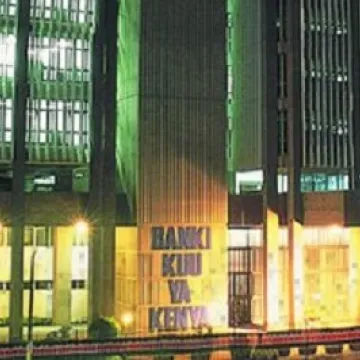
At the heart of the dispute is the government’s use of an overdraft facility at the Central Bank of Kenya (CBK), a mechanism Dr. Kiptoo described as a “standard and lawful” tool for managing short-term liquidity within government operations.
Legally provided for
According to the Treasury, the interest payments were financed through this facility, which is legally provided for under Kenya’s public financial management framework.
The overdraft, typically used to bridge timing mismatches between revenue inflows and expenditure obligations, allowed the government to honour the bond coupons as they fell due.
“While the amounts may have appeared outstanding within the Exchequer reporting framework, they were duly financed and settled through the Government overdraft facility at the Central Bank of Kenya, consistent with established cash and liquidity management practices,” the statement read in part.
The Treasury further noted that at no point were the obligations to bondholders in arrears, and that no claims, complaints, or disruptions were recorded from bondholders or market participants.
The disagreement between the Treasury and the Controller of Budget, two key pillars of Kenya’s fiscal oversight architecture, has reignited concerns about the clarity of public debt reporting in East Africa’s largest economy.
According to the Constitution, the Controller of Budget is mandated to monitor the implementation of the country’s spending plan budget, including the timely settlement of public debt.
Its earlier report had suggested delays in the May–June 2025 coupon payments, a finding that the Treasury now says reflects a misunderstanding of cash-flow timing rather than a default on obligations.
On Monday, the Chairman of President William Ruto’s Economic Council, Dr. David Ndii, dismissed the Controller of Budget’s finding, stating, “Not plausible. [The] Market would have reacted. Treasury maintains a healthy CBK overdraft headroom as liquidity insurance.”
According to the law, CBK’s overdraft is subject to statutory limits and is intended for short-term cash management, not long-term financing. The Treasury did not disclose whether the facility had been repaid or the terms of its usage.
So far, media reports show that domestic bond market participants did not experience any payment disruptions during the period under focus, lending credence to the Treasury’s position.
The yield on Kenya’s benchmark 10-year government bond has remained relatively stable over the past week, indicating that investors have not priced in a significant default or liquidity risk stemming from the dispute.
Uncertainty for analysts
Still, the episode underscores the communication gaps that can emerge between Kenya’s fiscal institutions. The Controller of Budget and the National Treasury have occasionally diverged in their reporting of cash flow and debt service metrics, creating uncertainty for analysts who rely on official data.
Treasury’s clarification comes as Kenya navigates a delicate post-pandemic fiscal consolidation path, underpinned by an International Monetary Fund (IMF) programme that requires strict adherence to debt transparency and deficit reduction targets.
As of December 2025, Kenya’s total public debt stood at approximately KSh10.5 trillion, with Treasury bonds accounting for the bulk of domestic borrowing.
Kenya has consistently met its debt service obligations, though critics have warned that high interest payments, often consuming over 60 percent of revenues, leave little room for development spending.
Dr. Kiptoo reiterated the Treasury’s commitment to “prudent public financial management, transparency, and the timely honouring of all Government obligations.”
The Controller of Budget has yet to respond to the Treasury’s clarification. It remains unclear whether this office will revise its earlier report or issue a supplementary statement acknowledging the use of the overdraft facility.
For now, the Treasury’s intervention appears designed to reassure both domestic bondholders and international partners that Kenya remains current on its sovereign obligations.
The National Treasury has said it will continue to use all legal mechanisms at its disposal to ensure the timely settlement of public debt, including the CBK overdraft, as part of “established cash management practices.”