Bond switch, long-term issuances signal shift in Kenya’s debt plan
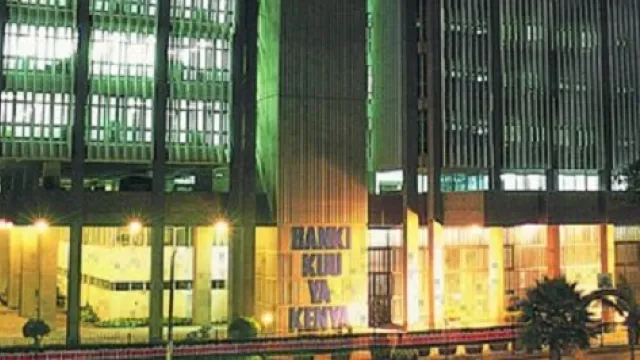
Central Bank of Kenya's combined use of bond reopening and switch auctions signals a more active approach to debt management, with authorities seeking to balance liquidity needs while reducing refinancing risks.
Kenya is increasingly turning to longer-dated debt instruments and liability management tools to ease near-term repayment pressure and smooth out its domestic debt profile.
In its latest transaction, the Central Bank of Kenya accepted Kes18.40 billion in a Treasury bond switch auction, allowing investors to exchange holdings in a bond maturing in November 2026 for a longer-dated security due in July 2034.
Related
Kenya trims its debt mount with Sh1.6 trillion Eurobond buyback

The switch auction attracted Kes22.21 billion in bids against an offer of Kes15 billion, translating to a performance rate of 148.06 percent, underscoring strong investor appetite for longer-tenor government paper.
Under the transaction, investors rolled over holdings in the FXD1/2021/005 bond into the FXD3/2019/015 bond, which carries a 12.34 percent coupon and has 8.3 years remaining to maturity.
The weighted average accepted yield settled at 11.5887 percent, below the coupon rate, resulting in a premium price of 105.8783 per Kes100.
Competitive bids dominated the allocation at Kes17.72 billion, compared to Kes0.68 billion in non-competitive bids.
The bond switch auction allowed the government to reduce the concentration of redemptions falling due in 2026, effectively pushing part of its repayment obligations further into the future while extending the average maturity of its domestic debt portfolio.
The move comes alongside sustained issuance of long-dated bonds, highlighting a broader shift in the government’s domestic borrowing strategy.
In March, the CBK raised Kes60.99 billion through the reopening of two long-term Treasury bonds, slightly exceeding its Kes60 billion target, with investor demand heavily skewed toward the longer 25-year paper.
Total bids reached Kes117.43 billion, nearly double the amount on offer, reflecting continued strong demand for government securities despite heavy issuance earlier in the fiscal year.
The reopening covered the FXD1/2019/020 bond maturing in 2039 and the FXD1/2021/025 bond due in 2046. The 25-year bond recorded a 4.15 times bid-to-cover ratio, signalling strong preference for longer-tenor instruments, while the 20-year bond posted a more moderate 1.13 times coverage.
Accepted yields came in below coupon rates, with the 2039 bond clearing at 12.75 percent and the 2046 bond at 12.95 percent, both priced above par.
Since July 2025, the Central Bank has conducted 12 reopening auctions, offering Kes600 billion and accepting Kes807.34 billion from total bids of Kes1.50 trillion, reflecting sustained liquidity and investor confidence in government paper.
By December 2025, the country’s cumulative domestic borrowing hit Kes554.96 billion, equivalent to 87 percent of the full-year domestic financing target, pointing to an aggressive front-loading of funding.
The combined use of bond reopening and switch auctions signals a more active approach to debt management, with authorities seeking to balance liquidity needs while reducing refinancing risks.
Switch auctions, though still relatively rare in Kenya, are gaining traction as a liability management tool. The March transaction marks the fourth such operation on record and the second in 2026, building on a framework first introduced in 2020 to lengthen the maturity structure of government debt.
By encouraging investors to move into longer-dated securities while maintaining strong issuance in the long end of the yield curve, the government is effectively easing short-term repayment pressure while locking in funding over an extended horizon.