Lawyers demand audit of G-to-G fuel deal amid oil prices revolt
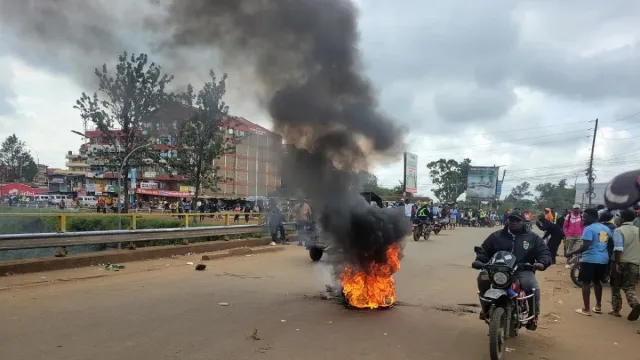
Wananchi protest against high fuel prices on Thika Super highway on 18 May 2026. The Law Society of Kenya has called for “a transparent and independent audit” of the G-to-G programme, including all matters relating to pricing, quality assurance and market competition.
Lawyers in Kenya have called on fresh audit of the Government to Government fuel purchase agreement even as they faulted energy chiefs for the recent sharp increase in fuel and electricity costs, accusing leaders of imposing an "economically unsustainable burden" on households and traders.
In a statement issued after a day of transport paralysis in Kenya that left businesses bleeding losses, workers stranded, property damaged and Cabinet Secretaries unable to offer solutions to concerned public, the Law Society of Kenya said it is considering "appropriate constitutional and judicial interventions."
Related
Schools shut, economy bleeds as revolt against high fuel prices grips Kenya
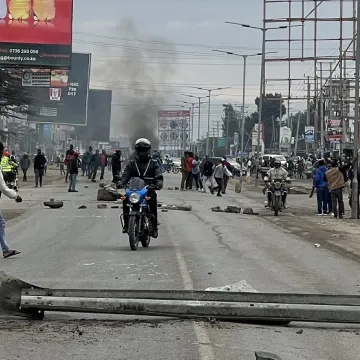
The lawyers lobby said it is considering to challenge the legality of Kenya's fuel pricing mechanism, and could move to court if corrective measures are not adopted.
Transporters across Kenya went on strike on Monday, following the roll out of revised petroleum prices published by the Energy and Petroleum Regulatory Authority (EPRA) on May 14 for the period running May 15 to June 14.
Under the new framework, the price of diesel surged by KSh46.29 per litre to KSh242.92 in Nairobi, while super petrol increased by KSh16.65 to KSh214.25 per litre.
VAT Petroleum
The increases came just weeks after the National Treasury temporarily reduced value added tax on petroleum products to 8 percent through Legal Notice No. 70 of 2026, a move which has now been overshadowed by the scale of the latest sharp increase in pump prices.
Concurrently, the LSK noted, Gazette Notices No. 6002, 6003 and 6004 introduced electricity pass-through adjustments amounting to approximately KSh4.72 per kilowatt-hour, comprising fuel energy cost charges, forex fluctuation adjustments and statutory levies.
The society said these adjustments were “partly attributed to increased thermal generation costs and foreign exchange losses within the energy sector”.
Additionally, the lawyers lobby cited lack of transparency in the government-to-government fuel purchase agreement Kenya entered into with the UAE and Saudi Arabia about four years ago.
LSK called for “a transparent and independent audit” of the G-to-G programme, including all matters relating to pricing, quality assurance and market competition.
The society also demanded publication of the legal, fiscal and policy considerations behind the recent depletion and utilisation of the Petroleum Development Levy stabilisation mechanism, raising questions about fiscal accountability and consumer protection under the Energy Act 2019 and the Petroleum Act 2019.
In a particular, the LSK called on the government to provide an update on investigations into the importation and circulation of allegedly adulterated fuel containing high levels of sulphur, which has reportedly caused mechanical problems for motorists.
The society specifically requested information on the arrest and prosecution of “top KPC officials,” a reference to the Kenya Pipeline Company linked to irregularities in fuel procurement that have coincided with diesel prices surging to unprecedented levels.
“Should immediate corrective administrative action fail to materialise, the society shall move to court to seek appropriate reliefs aimed at safeguarding constitutional governance, consumer rights, civil liberties and the socio-economic welfare of the people of Kenya,” said Charles Kanjama, SC, president of the Law Society of Kenya, in the statement.