Schools shut, economy bleeds as revolt against high fuel prices grips Kenya
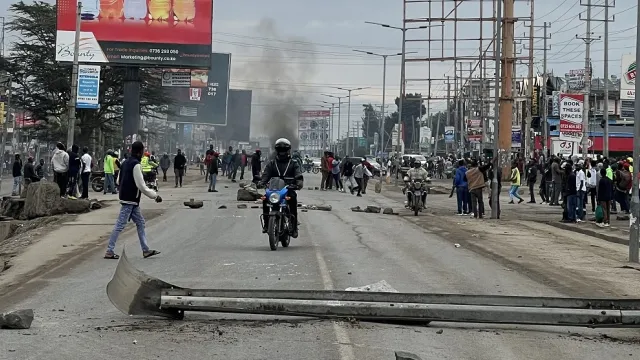
Protesters close part of the road in Rongai in the outskirts of Nairobi as revolt against high pump prices engulfs Kenya.
Motorists and transporters pushed past the breaking point by the latest fuel price increase have paralysed Kenya's economy with countrywide revolt on Monday leaving schools shut, businesses closed and roads impassable.
Across the country, striking public lit bonfires on key highways and roads leaving thousands of commuters stranded even as private motorists also faced the wrath of angry mobs aggrieved by sky-high pump prices amid a tough business environment in East Africa's largest economy.
Related
Iran war threatens to wipe out Kenya's Sh164Bn Gulf exports
Energy CS dismisses fuel shortage fears amid Middle East conflict
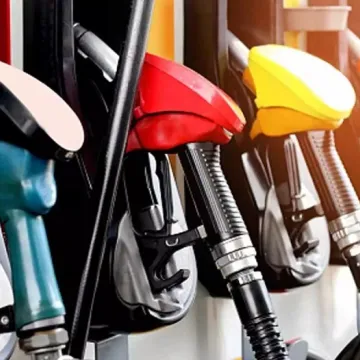
A spot check by Maudhui across major cities towns shows public service vehicles failed to report to work on Monday, schools informed parents they will not be picking up pupils even as a significant number of businesses asked their employees to take the day off or work from home.
"Dear parents, due to the planned demonstrations, we kindly request that all learners remain at home tomorrow, Monday, 18th May 2026. While we may be able to pick them up safely in the morning, we are uncertain about their safety during the evening drop-off. We will keep you updated regarding the resumption of classes on Tuesday," a text seen by Maudhui House similar to thousands others send to parents across Kenya on Sunday night reads in part.
The schools' communique to parents came at the same time when an alliance of transporters including operators in public transport, cargo movers and related stakeholders directed that "no vehicle shall move starting midnight today [Sunday] in the nationwide strike."
The statement noted that players in all transport subsectors, covering passenger transport, cargo and logistics, ride-hailing, motorcycle transport, tourism transport, driving schools, school buses and private motorists have resolved to stand together in one of the largest coordinated industrial actions in Kenya’s history.
"The ordinary mwananchi is the ultimate victim of high fuel prices, paying more for transport, food, electricity, and essential commodities. For this reason, farmers, business owners, workers, and consumers across the country have already expressed solidarity. They are expected to participate in the demonstrations in their towns, shopping centres, and local communities," the notice read in part.
In the latest price review, super petrol increased by KSh16.65 to KSh214.25 per litre in Nairobi while diesel, which is the fuel of choice for majority transporters, rose sharply by KSh46.29 to retail at an historic high of KSh242.92 per litre.
Among other demands, transporters are seeking immediate standardisation of all petroleum products at the current kerosene price of KSh152.78 per litre.
They are also calling for the slashing of petrol and diesel prices to approximately KSh152 per litre, with the long-term target being KSh 140–150 per litre.
Additionally, the stakeholders are calling for the rresignation or dismissal of the Cabinet Secretary for Energy and Petroleum Opiyo Wandayi as well as the disbandment of the Energy and Petroleum Regulatory Authority (EPRA), the unit charged with setting fuel prices every month.
Revive Changamwe oil refinery
Other demands on the table include the revival of defunct Changamwe oil refinery and roll out of a new oil pricing scheme that comes into effect every quarter.
"Kenya should not continue paying some of the highest fuel prices in the region while countries such as Ethiopia, despite being landlocked, maintain significantly lower pump prices. Comparisons with other East African countries are misleading and unjustified, especially when neighbouring states have adjusted their prices upward by benchmarking against Kenya," the transporters added.
While appearing on Nation FM's morning show Fixing the Nation, however, Treasury CS John Mbadi appeared unmoved terming the strike uncalled for.
Mbadi observed that pump prices could be even higher were it not for government interventions. "This is not a time to make emotional decisions."
The CS said the Government will reconvene upon President Ruto's return from Azerbaijan to explore further interventions to protect Kenyans from soaring fuel costs.
Globally, fuel prices have been on the rise since the 28 February 2026 U.S.-Israel attack on Iran. At the moment, the Straight of Hormuz remains under U.S. blockade effectively constraining the flow of fuel from the oil rich Gulf nations to the international markets, a scenario that is forcing countries to purchase the product from far flung sources.