Diageo gets CAK approval to exit from East African Breweries

The Competition Authority of Kenya has mandated that EABL set aside 20 percent of its retail cooler space for competitors’ products, a striking intervention designed to prevent the combined entity from leveraging its distribution muscle to freeze out rival brewers.
Kenya’s competition regulator has approved Diageo’s $2.3 billion sale of its 65 percent stake in East African Breweries (EABL) to Japan’s Asahi Group Holdings, clearing the way for the London-listed spirits giant to complete its retreat from direct ownership of one of Africa’s largest brewers.
The Competition Authority of Kenya’s decision, which was announced on 10 September according to Bloomberg, brings an end to a nine-month regulatory and legal challenge that had tested both Diageo’s patience and Kenya’s reputation for business regulations.
Related
Japan's Asahi gulps Diageo's EABL stake in KES296 billion deal
Bia Tosha abandons multi-billion claim, clearing legal path for Diageo-Asahi deal
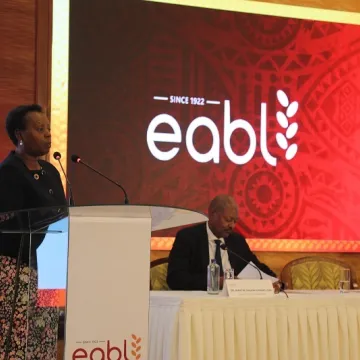
“EABL notes the approval by the Competition Authority of Kenya regarding the proposed transaction between Diageo PLC and Asahi Group Holdings, Ltd,” EABL stated in an update to Reuters.
The regulator has directed the brewer to reserve sufficient funds from the transaction proceeds to cover outstanding liabilities, a sum media reports estimate could reach KSh15 billion ($116 million).
Retail cooler space
CAK has also mandated that EABL set aside 20 percent of its retail cooler space for competitors’ products, a striking intervention designed to prevent the combined entity from leveraging its distribution muscle to freeze out rival brewers.
Diageo had fought these conditions, calling them “unlawful” and insisting they had “absolutely no connection to the transaction”.
The regulator’s insistence on the reserve fund reflects broader anxieties about EABL’s mounting legal exposures, including a long-running dispute with distributor Bia Tosha that has already produced one dismissed suit and a request from EABL to Kenya’s chief justice for expedited hearings.
When Diageo announced the sale in December 2025, it framed the move as part of a broader strategic pruning of its African portfolio. Asahi, Japan’s largest brewer, saw an opportunity to acquire a dominant position in a region where beer consumption is growing faster than in its mature home market. The $2.3 billion price tag valued EABL at roughly $4.8 billion.
What followed was a masterclass in Kenyan litigation. Distributor Bia Tosha sued. A minority shareholder, Christine Irungu, filed a constitutional petition alleging that the transaction trampled on minority rights and that regulators had failed to scrutinise the deal properly.
Facing mounting wave of lawsuits, EABL wrote to Chief Justice Martha Koome in June, warning that parallel proceedings across different High Court stations were producing contradictory orders and damaging investor confidence.
At one point in June, a Machakos court issued conservatory orders halting the deal hours after a Nairobi court had declined to do the same. The transaction also faced an appeal before the Capital Markets Tribunal over the regulator’s decision to exempt Asahi from making a mandatory takeover offer to minority shareholders.
Deal completion
The High Court ultimately upheld the status quo, freezing completion while allowing the competition authority to continue its review. The deal’s expected completion in the second half of 2026 looked increasingly aspirational.
For the Kenyan government, the transaction carries a tangible fiscal prize: capital gains tax of between KSh40 billion and KSh42 billion, a sum that would be welcome in a year of constrained public finances.
Once the deal is sealed, Asahi will control East Africa’s dominant brewer, with brands spanning beer, spirits and non-alcoholic beverages across Kenya, Uganda and Tanzania.
For Asahi, the approval marks a significant expansion into Africa, a continent where Japanese brewers have historically been marginal players. For Diageo, it is a clean exit from a market it has served for nearly a century.
EABL’s shares closed at KSh296 on the Nairobi Securities Exchange in early September, up more than 60 percent from a year earlier, a rally that reflected both improving earnings and anticipation of the deal’s completion.