Bankers push for Sh28Bn PAYE cut for workers, say it will pay back in a year
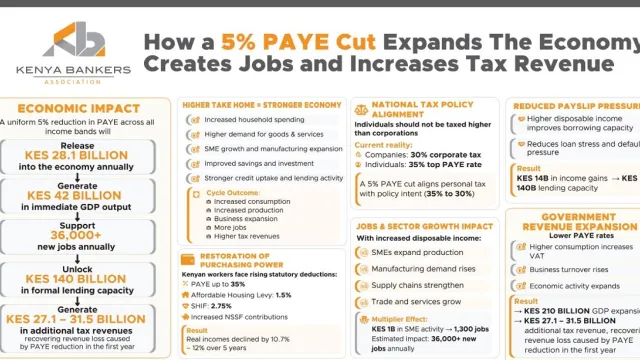
Kenya's banking industry estimates that 5% PAYE relieve has the potential to generate about KES42 billion in immediate GDP output through higher consumption and demand.
Banker in Kenya have called on the government to slash PAYE by a uniform 5 percentage points for all employees, arguing that the policy move could give workers KSh28.1 billion and trigger larger economic activity to offset the initial revenue loss in under a year.
This relieve on workers’ pockets would trigger the creation of an estimated 36,000 new jobs based on MSME job creation estimates of 1,300 jobs per KES 1 billion invested.
Related
Bankers push CBK for rate cut to ease loan losses, spur uptake
Shilling's rally echoes economic confidence — Bankers

In a policy recommendation published by the Kenya Bankers Association on Thursday, the lobby cited current tax burden on workers noting that it continues to shrink the purchasing power of individuals amid steady drop in real incomes which have decreased by between 10.7 to 12 percent since 2021.
"A 5 percent reduction in PAYE would release about KES 28.1 billion annually into the economy, increasing disposable income and strengthening household purchasing power," KBA explained in a statement.
The lobby argued that the KSh28 billion would be a welcome boost in household budgets, supporting the purchase of food, payment of rent, transport and fees in schools.
The banking industry estimates that the relieve has the potential to generate about KES42 billion in immediate GDP output through higher consumption and demand. Additionally, the fiscal policy intervention would unlock up to KES140 billion in formal lending capacity for business expansion and investment.
GDP expansion by KES210 billion
"The unlocked KES140 billion will expand GDP by about KES210 billion and generate an additional KES 27–31 billion in tax revenues, effectively offsetting the initial revenue foregone within a financial year through increased economic activity," KBA tabulation notes in part.
KBA's proposal comes at a delicate moment when the Kenya Revenue Authority is under pressure to meet high revenue collection targets, even as the working population complain tax increases have left employees with decreasing take home.
With rising prices of goods, a worker who earned KSh30,000 in 2021 now needs at least KSh33,600 to buy the same basket of goods yet their net offer has sustained more deductions during the period under focus.
KBA position means that the Laffer Curve, which is the economic theory that lowering tac rates can sometimes yield the net effect of increasing total revenue on account of rising activity, applies to the current PAYE bands in Kenya.
Kenya is currently navigating a tight fiscal policy as plans for the 2026/27 spending plans get underway, with the government giving signals that it seeks more taxes to meet mounting debt obligations.