KCB pushes for risk-sharing partnerships to unlock climate finance
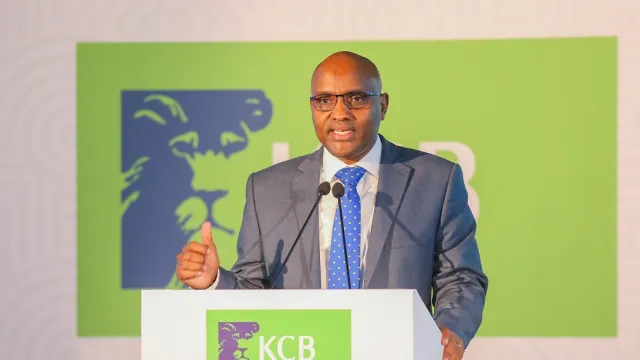
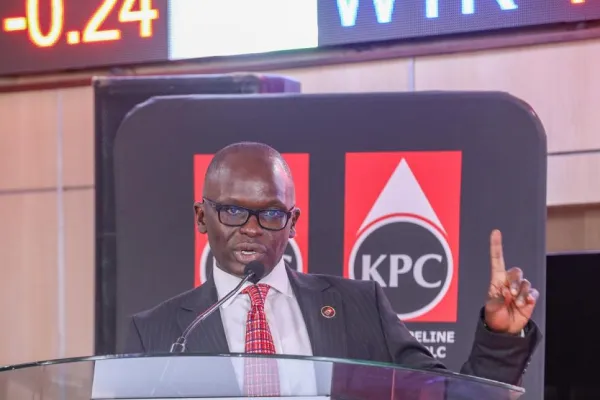
KCB Group CEO, Paul Russo, during the panel discussion on Climate Finance, Equity, and the Just Transition: Unlocking Private Investments in Kenya and Africa at the 3rd Climate Change Global Business Summit on Africa
As Africa seeks to bridge a mounting climate financing gap, KCB Group CEO Paul Russo has called for stronger collaboration between commercial banks, development finance institutions (DFIs) and governments to de-risk green investments and unlock long-term capital for the continent’s energy transition.
Speaking at the 3rd Climate Change Global Business Summit on Africa, held at Villa Rosa Kempinski Hotel in Nairobi, Russo joined a high-level panel of policymakers, global investors, and private sector leaders to examine practical pathways for mobilizing private investment in climate solutions.
Related
KCB and Proparco join forces in Sh12Bn green finance plan
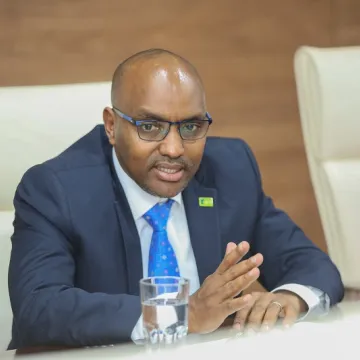
The summit convened senior government officials, including Cabinet Secretary for Agriculture Mutahi Kagwe, global investors such as the French Chamber of Commerce, and industry bodies such as the Kenya Private Sector Alliance (KEPSA).
Discussions cut across unlocking private capital for climate-resilient energy and infrastructure, sustainable urban development, and low-carbon mobility.
Russo featured on a high-profile panel titled *“Climate Finance, Equity, and the Just Transition: Unlocking Private Investments in Kenya and Africa,” moderated by Citizen TV’s Yvonne Okwara.
The session brought together voices from finance, policy, and development sectors to explore how Africa can position itself as a premier destination for sustainable investment.
“We have built a team of subject matter experts, and we are therefore equipped to co-create solutions,” Russo said, noting that addressing climate constraints demands a collective approach.
He highlighted that while capital exists globally, it often remains on the sidelines due to perceived risks in emerging markets. To counter this, he called for deeper partnerships between DFIs, governments, and commercial banks to share risk, improve the quality of project pipelines, and structure financing that can attract institutional investors.
KCB’s Green Lending
Underpinning the bank’s advocacy is a concrete sustainability strategy. KCB has set a target to allocate 25 percent of its total loan book to green financing, channeling capital toward renewable energy projects, clean technologies, and industries transitioning to low-carbon operations.
“We have set a target to allocate 25 percent of our total loan book to green financing, helping accelerate the transition toward sustainable industries,” Russo told delegates.
The commitment positions KCB among the region’s more aggressive lenders in aligning portfolio growth with climate goals, a move that also reflects growing pressure from regulators, investors, and global financiers for African banks to adopt robust environmental, social, and governance (ESG) frameworks.
The summit served as a strategic bridge between financiers, policymakers, project developers, and technology solution providers, an ecosystem that Russo said is critical if Africa is to leapfrog to cleaner energy while ensuring a just transition that does not leave vulnerable communities behind.
With Africa accounting for less than 4 percent of global carbon emissions but facing some of the most severe climate impacts, the urgency to mobilize capital has never been higher. The dialogue at Villa Rosa Kempinski underscored a growing consensus that public funds alone will not suffice; private capital must flow at scale.
For KCB, the conversations reinforced its positioning not just as a lender, but as a convenor and driver of sustainable growth.
“KCB is proud to be at the heart of these conversations and a driver of sustainable growth,” Russo said, signaling the bank’s intent to play a lead role in shaping the financial architecture for Africa’s green transition.