Over 400 women in Murang’a benefit from restorative fistula surgery
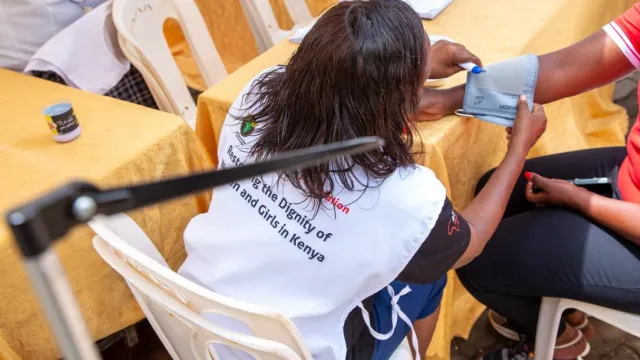
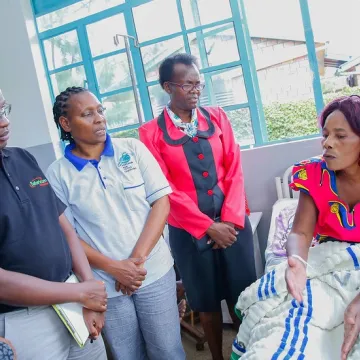
VVF nurse and trainer Christine Muthengi attends to patients during triage at the fistula medical camp in Murang’a.
A critical shortage of trained fistula surgeons, delayed emergency obstetrics care and complications at childbirth are impeding progress to strengthen maternal healthcare systems, against a growing national burden of approximately 120,000 women who are untreated.
At the weekend, Murang’a County Referral Hospital saw over 400 women undergo corrective fistula surgery, with others undergoing screening, counselling and physiotherapy.
Related
Drive to eradicate fistula targets four counties
M-Pesa Foundation’s fistula camp delivers care in Migori
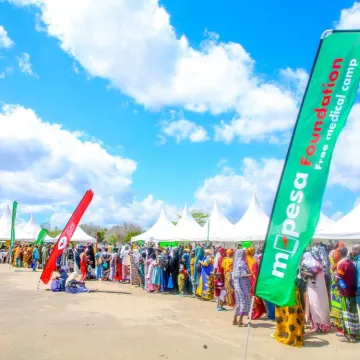
This initiative under the M-PESA Foundation, Ministry of Health, and the Murang’a County Government, with support from clinical partners including the Flying Doctors and Amref Health Africa is poised to significantly enhance Kenya’s long-term capacity to manage fistula cases.
According to Vesicovaginal Fistula (VVF) nurse and trainer Christine Muthengi, some patients had lived with the condition for decades, with cases dating as far back as 1991, resulting in abandonment by spouses and isolation by family members, causing social withdrawal.
“Obstetric fistula is a devastating childbirth injury that causes chronic incontinence, deep physical trauma and social isolation, from constant leakage to resultant foul smell, Women and girls are forced into hiding for years, to save them from shame,” Muthengi said.
Fistula stigma
According to Muthengi, the biggest challenge to address fistula remains stigma, where patients are afraid to share their experiences, hiding their condition, hence not seeking medical attention.
While the condition remains prevalent during childbirth, many women do not understand it, delaying seeking medical care.
Despite Murang’a County’s strong maternal health indicators, including a 96 percent skilled birth attendance rate and a low teenage pregnancy rate of 7 percent, underlying challenges such as poverty, early and unintended pregnancies among adolescents, misdiagnosis and delays in accessing emergency obstetric care increase the risk of obstetric fistula.
“No woman should have to suffer in silence. Fistula surgery may seem like a simple procedure, but the transformation it brings to a woman’s dignity, health and future is profound,” said Patricia Ithau, trustee, M-Pesa Foundation.
To support the initiative, M-Pesa Foundation invested KES8.1 million, part of a KES213 million commitment that has seen more than 1,500 women in high-burden counties access treatment and resume their normal lives.