Kenya's first Ebola death triggers contact tracing for 28 individuals

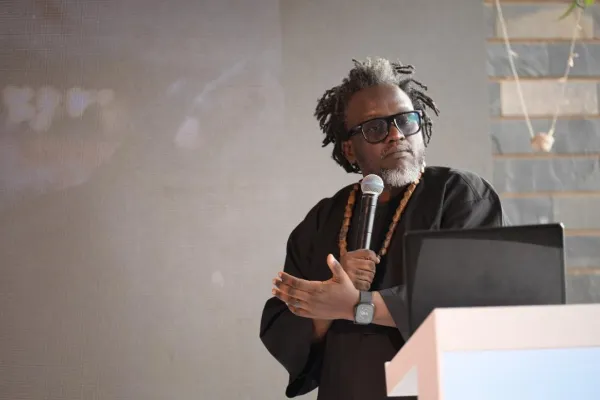
Health Cabinet Secretary Aden Duale
Months after public protests against the set-up of Ebola quarantine centre in Laikipia, authorities in Kenya have confirmed the first case of the disease and the patient has died at the Nairobi Hospital.
On Tuesday, the Ministry of Health announced that plans are underway to contact 28 individuals, including family and health workers, who came into contact with the diseased during his travel to Kenya from the Democratic Republic of Congo (DRC).
Related
Ruto backs Ebola centre set up in Laikipia as cases cross 1000

Opposition grows on U.S. plan for Ebola treatment centre in Kenya
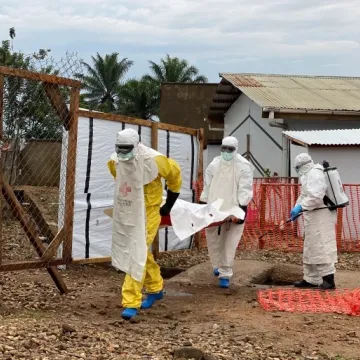
According to Health Cabinet Secretary Aden Duale, the deceased contracted the viral disease about a month ago and sought treatment in various centres in the DRC.
Disclosures show that he travelled via road from DRC to Kampala, Uganda, before boarding a flight to the Jomo Kenyatta Airport on 3rd October.
CS said the man passed routine health checks at the JKIA, but his relatives rushed him to the Nairobi Hospital where he was isolated until his death on Monday, October 5th.
At the moment, Health officials are tracing all the 23 passengers who travelled with him to JKIA on the same flight as well as his family members for isolation and monitoring.
CS Duale said nearly 5,000 health workers have been trained in Ebola prevention and management, and the World Health Organisation has been notified. “All systems are in place to mitigate the spread of the disease,” he insisted.
Kenya's case comes at a time when the epicentre of the viral disease, DRC, continues to battle the outbreak of the rare Bundibugyo Ebola, which hit the headlines in May. As estimated 4000 deaths have been reported across DRC with total cases totalling over 8,500.
Neighbouring Uganda declared itself Ebola free in August.
In June and July, CS Duale came under fierce opposition following the government stand to approve the construction of a U.S.-backed Ebola quarantine centre at Laikipia Airbase.
The planned 50-bed facility, which was exclusively meant for Americans in the region exposed to the disease, was criticised for opeing the window for possible contacts which could see the disease spread locally.
Medical unions, civil-society groups and local residents denounced the idea of Kenya serving as a “containment colony.” Hundreds marched in Nanyuki and other parts of the country opposed to the idea.
At the same time, the High Court issued temporary suspensions after petitions from the Katiba Institute and the Law Society of Kenya argued that the project violated constitutional protections and lacked transparency.
Health Secretary Duale himself was briefly found in contempt of court for allowing construction to continue, though he later apologised and avoided jail.
The facility was eventually built at significant cost, estimates ran to $70 million, but has remained largely unused, housing only a handful of American aid workers for the required 21-day observation periods.