KCB woos informal sector ventures with single-digit interest rate mortgages
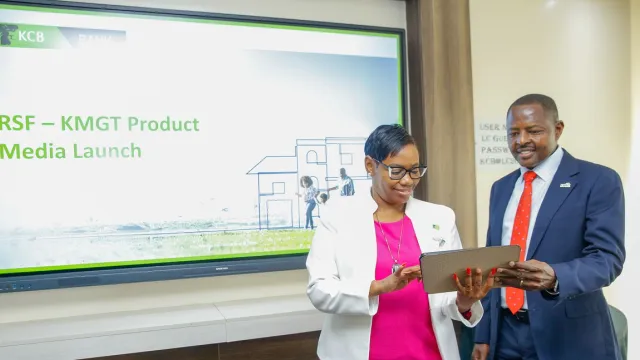
KCB Bank Kenya Director, Mortgage, Caroline Wanjeri (left) and Kenya Mortgage Refinance Company CEO Johnstone Oltetia during the KMGT Product Media Launch at the KCB Leadership Centre. The new product is a transformative mortgage solution designed to unlock home ownership for Kenya’s informal sector.
Lender KCB has announced a fresh push to entrench is services in Kenya's informal sector with the launch of single-digit interest rate for home hunters as part of bold plan to align with the State-backed affordable housing plan.
According to KCB, its mortgage offering is tailor-made for boda-boda operators, SMEs, artisans and individuals engaged in the gig economy which is characterised by irregular but consistent incomes.
Related
Absa ups the stakes in mortgage market with 110% financing deal

Why property prices are on sharp rise, shaking off mortgage woes

Kenya's informal sector, which accounts for the bulk of the working population, has long been sidelined from mainstream financing products owing to a mix of reasons including unpredictable incomes and inconsistent business records.
“For years, Kenya’s mortgage uptake has been concentrated among formally employed and middle to high income earners, a scenario that has kept the mortgage penetration levels at around 3 percent. With more than 80 percent of Kenya’s workforce operating in the informal sector, the new mortgage solution seeks to increase financial inclusion, ease the rigid credit assessment mortgage models and enable an increase in homeownership for Kenyans,” said KCB Bank Kenya Director of Mortgage Business, Caroline Wanjeri.
KCB said potential beneficiaries of its home loan products must show record of operation lasting at least two year for loan products ranging between KSh1 million and KSh4 million. Beneficiaries will have up to 15 years to service their loans.
Unlike conventional mortgage products that rely heavily on formal pay slips and employer contracts, KCB’s new solution leverages transactional history, mobile money flows, business records, savings patterns, and alternative data to assess affordability and repayment capacity
“This solution acknowledges that Kenya’s economy runs on enterprise. By combining alternative credit assessment and financial discipline we are making mortgage financing accessible by redefining eligibility through consistency in business performance as a credible pathway to dignified home ownership,” Wanjeri added.
With an annual urban growth rate of 4.4 percent, Kenya faces a significant housing backlog that continues to adversely impact the health and well-being of low-income households.
Additionally, Kenya’s Vision 2030 Third Medium Term Plan (MTP III) 2018-2022 highlights affordable housing as a crucial element to the realization of inclusive growth that is capable of supporting the development of a sustainable future.
The realization has however been hindered by a constrained flow of investment finance to the sector, increased costs of construction for developers, as well as diminished affordability levels for customers throughout the housing and demand value chain.
This timely structural intervention will therefore help to unlock the much-needed long-term capital for the ordinary Kenyan to own a home.