Ziidi Trader: a step-by-step guide to trading shares at the NSE
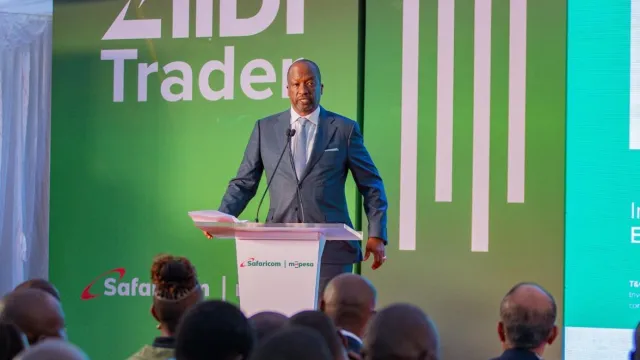
On 10th February during the launch of Ziidi Trader, Kiprono Kittony, the Nairobi Securities Exchange Board Chairman, cited the psychological shift that Ziidi Trader enables. “Ziidi Trader places equity trading alongside everyday financial actions such as bill payments and airtime purchases. The proximity lowers psychological and practical barriers, potentially converting passive savers into active market participants”.
In February, a quiet revolution in Kenya's capital markets took root at the Nairobi Securities Exchange (NSE).
President William Ruto stood alongside Safaricom PLC executives and capital markets regulators to launch a service that is poised to do what stockbrokers have struggled to achieve for decades: bring the bourse to the masses, especially Kenya's tech-savvy youth.
Related
Ziidi Trader makes buying shares as easy as sending M-Pesa
The birth of Ziidi: A pocket-sized revolution in wealth creation
Ziidi Trader, an innovation embedded within the M-PESA app, allows anyone with a mobile phone and a Safaricom line to buy and sell shares listed on the NSE directly from their mobile wallet. No paperwork. No stockbroker visits. No minimum investment beyond the price of a single share.
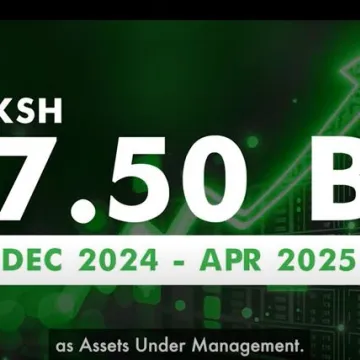
The early numbers have been encouraging. During the platform’s pilot phase, which began just days before the official launch, Ziidi Trader accounted for roughly 7,500 of the 14,000 daily trades executed on the NSE, marking the highest daily retail trade volume on record. As of March, disclosures show Ziidi Trader accounts for over 60 percent of all share orders per day at the bourse.
For an exchange that has struggled for a long time to attract individual investors, this was a signal that one of the barriers to entry is steadily collapsing.
The market problem that Ziidi Trader solves
To understand the innovative power behind Ziidi Trader, one must first look back at how investing in Kenya used to function. Until recently, anyone who wanted to buy shares in a company such as Safaricom, Equity Bank, or East African Breweries Limited faced several obstacles.
First, they needed a Central Depository System (CDS) account, a process that required filling out forms, submitting identification documents, and waiting days or even weeks for approval.
Then came the stockbroker: a licensed intermediary who would execute trades on their behalf, typically charging fees between 1.8 percent and 2.5 percent of the transaction value.
For low-income earners, these barriers were prohibitive.
Additionally, until recently, the minimum investment threshold was fixed at KES 50,000, effectively blocking potential investors. Even after that requirement was removed, the psychological and practical hurdles remained.
Opening a CDS account required knowing which broker to approach and understanding unfamiliar market terminologies. It also meant navigating processes that are typically designed for institutional investors, not every day Kenyans.
As a result, despite Kenya having over a million registered CDS accounts, fewer than 200,000 are active on a monthly basis. Trading volumes have remained thin, and the market has struggled to attract younger and lower-income investors.
As NSE Chairperson Kiprono Kittony put it at the launch of Ziidi Trader, the goal was to ensure that “access to investment is not a privilege of a few but a right for all who aspire to participate in the country’s economic growth”.
How Ziidi Trader works
The most radical departure from tradition is that Ziidi Trader does not require a CDS account. Instead, trades from thousands of customers are pooled into an omnibus account operated by Safaricom PLC in partnership with Kestrel Capital, which is a licensed stockbroker.
To get started, a user simply opens the M-PESA app, navigates to the Financial Services tab, and selects Ziidi Trader. After accepting the terms and conditions and answering a few basic questions such as employment status and source of income, the service is activated. This process takes minutes, compared to the days required for traditional CDS account opening.
Crucially, Ziidi Trader relies on the existing M-PESA Know Your Customer (KYC) credentials, implying that for millions of potential investors, no additional document uploads are required.
Buying shares: as simple as sending money
Once onboarded on Ziidi Trader, the user is presented with a list of all companies traded on the NSE, complete with logos, descriptions, and real-time price data. To buy shares, a buyer must:
- Select the company of interest and tap "Buy."
- Choose between "Best Price" (the lowest price a seller is offering) or set an "Own Price" (the maximum price you are willing to pay).
- Enter the quantity of shares desired.
- Review the trade summary and confirm the purchase by inputting one's M-PESA PIN.
The funds are immediately reserved from the M-PESA wallet. And once the order is executed, the shares are reflected in the user’s portfolio. If the order is not matched by the end of trading hours (3:00PM East African Time), the investor’s funds are refunded automatically.
Selling shares: instant settlement
Selling follows a similar process. Under the Trade tab, the user selects a security, taps "Sell," sets a price, and confirms with their PIN. When a match is found, the proceeds are credited directly to the M-PESA wallet, instantly.
Tracking stock performance
A portfolio tab shows the investor’s total holdings, current value of shares held, and the profit or loss position over the investment horizon. Users can also set watch lists and price alerts for companies they are monitoring.
Dividends: paid directly to M-PESA
Another key innovation under Ziidi Trader is the dividend distribution mechanism. When a company declares a dividend, the payment is calculated based on the number of shares held as at the book closure date and disbursed directly to the investor’s M-PESA wallet.
The dividend payment procedure marks a bold departure from the past, where shareholders received notification for cheque collection or bank deposits, effectively eliminating delays in shareholder payouts.
Lower fees for small investors
Traditional brokerage fees in Kenya typically range between 1.8 percent and 2.5 percent of the transaction value. This charge has often discouraged small and frequent trades. Ziidi Trader is expected to operate at approximately 1.5 percent, betting that lower margins can be offset by a sharp rise in retail trading volumes.
For an investor buying KES 10,000 worth of shares at the NSE, the difference in cost is meaningful. At a 2.5 percent fee, the transaction charge would be KES 250. At 1.5 percent, however, this fee drops to KES150, a 40 percent reduction.
What leaders are saying about Ziidi Trader
Since its launch, Ziidi Trader has gotten significant praise from the highest levels of government and the captains of the financial services industry.
President William Ruto, speaking at the NSE during the launch, described the platform as “a decisive turning point in how citizens engage with the stock exchange.” He added: “It opens the doors of market participation wider than ever before, dismantling long-standing barriers that have locked out many willing investors and bringing opportunity closer to all citizens".
Dr. Ruto directed the National Treasury to work with capital market stakeholders to remove any remaining barriers that might hinder traders from embracing Ziidi Trader.
On his part, Peter Ndegwa, Safaricom’s Group CEO, framed the launch within the broader evolution of M-PESA. “For eighteen years, M-PESA has transformed how Kenyans live, work, and do business. Today, in partnership with the NSE, we are extending that impact to how our customers build and grow their wealth,” he said.
Frank Mwiti, CEO of the Nairobi Securities Exchange, highlighted the inclusivity angle: “By making NSE transactions accessible through M-PESA, we are broadening participation in investment, both locally and internationally, and enabling more people to play an active role in Kenya’s economic growth”.
Kiprono Kittony, NSE Board Chairperson, cited the psychological shift that Ziidi Trader enables. “Ziidi Trader places equity trading alongside everyday financial actions such as bill payments and airtime purchases. The proximity lowers psychological and practical barriers, potentially converting passive savers into active market participants”.
A look at risks in equity investments
As a matter of importance, traders must exercise caution. Ziidi Trader does not eliminate the fundamental risks of equity investing. The price of shares can change due to a company’s performance, market sentiment, economic conditions, and other factors.
As Safaricom notes in its FAQs, “Ziidi Trader does not provide investment advice”. Investors should conduct their own research or seek independent financial guidance.
What’s more, the omnibus account structure also introduces considerations that differ from traditional CDS ownership. Because shares are held in a pooled account managed by the broker, the investor’s name does not appear directly on the company’s register. Dividends, however, are paid directly to the investor’s M-PESA wallet based on the internal ledger maintained by Ziidi Trader.
Safaricom is explicit about its role. The company’s terms and conditions state: “Safaricom shall not be responsible for providing investment advice or recommendations; executing, clearing, or settling Securities transactions; holding, managing, or having custody of Securities; or otherwise acting as an intermediary, agent, or representative for securities trading”. Kestrel Capital, the executing broker, bears responsibility for all regulated securities activities.
Driving financial inclusion
Ziidi Trader is the latest addition to Safaricom’s Fintech 2.0 strategy, which began with the launch of Ziidi Money Market Fund (MMF) in 2025 and later expanded to include Ziidi Shariah, a product compliant with Islamic finance principles. Together, these offerings position Safaricom's M-PESA ecosystem as a wealth management platform rather than merely a payments service.
The Nairobi bourse has long sought to deepen retail participation, and Ziidi Trader offers perhaps the most credible path yet to achieving that goal. NSE’s ambition, as reported by The Star, is to grow the number of market participants from one million to over 30 million.
A beginner’s checklist before investing…
For potential stock investors considering their first trade on Ziidi Trader, here are a few practical considerations:
- Start small. Equity prices can be volatile, so consider purchasing a single share to understand how the platform works before committing larger amounts.
- Understand what you are buying. Ziidi Trader provides company logos, descriptions, and recent performance data. Investors should, however, conduct their own research.
- Trade within market hours. The NSE is open Monday through Friday, 9:30 AM to 3:00 PM. Orders placed outside these hours are usually processed during the next trading day.
- Know the difference between “Best Price” and “Own Price.” While Best Price executes at the current market price, Own Price allows you to set a limit, meaning that your order will only execute if the market reaches your specified price.
- Be patient with orders. Trades depend on matching with a willing buyer or seller. Some orders may take time to execute; others may expire unfilled at the end of the trading day.
Ziidi Trader is poised to become one of Kenya's most significant pushes yet to redesign how ordinary wananchi access the capital markets through a consumer interface that already mediates their everyday economic life.
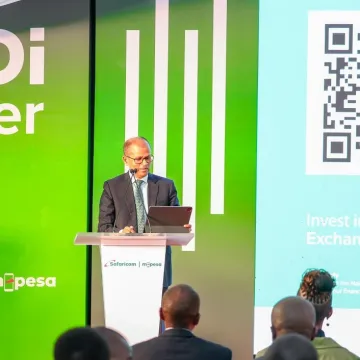
As Dilip Pal, Safaricom’s Chief Finance Officer, said at the launch: “We invite all Kenyans to move from being observers to active participants in our capital markets”.