NMG sale hands influence to Africa’s rising cross-border business elite
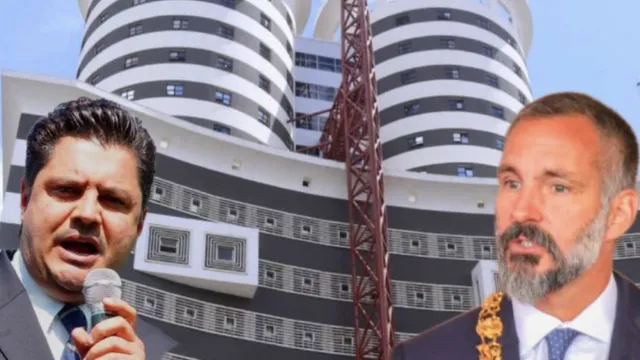
The Aga Khan Fund for Economic Development (AKFED) has announced sale of its Nation Media Group (NMG) stake to Taarifa Ltd, a entity owned by Tanzanian businessman Rostam Azizi. (Illustration Source: NTV Kenya)
After 66 years, the Aga Khan Fund for Economic Development (AKFED) has decided sell all its Nation Media Group (NMG) shareholding to Taarifa Ltd, a company owned by Tanzanian businessman Rostam Azizi.
While this deal still requires regulatory approvals across multiple jurisdictions, including Kenya, Tanzania, and Uganda, the biggest question about it is not that it happened, but its timing.
Related
Ruto imports revive fortunes of SGR dynasties

The man who brought East Africa’s roadside chapatis
Officially, AKFED says it has conducted “a strategic review of its investment portfolio” and decided to focus on its core sectors, including financial services, infrastructure, industrials and hospitality.
Quite notably, NMG was the only media investment in AKFED’s entire global portfolio. That is the formal explanation, but it does not fully answer the deeper question: Why now?
For more than 60 years, NMG was an unusual institution in African media. It was owned not by a political family or a commercial conglomerate, but by a development agency tied to the Aga Khan network. That structure gave it a degree of insulation from the political and business pressures that often shape editorial agendas in the region.
Now, AKFED’s exit signals the end of that model. And, for many journalists who were, and continue to be, polished by this machine, it is hard to fathom the fact that once the transaction closes, the global development institution that founded ‘Taifa Leo’ and the flagship ‘Daily Nation’ many decades ago will have no involvement at all in the company.
In practical terms, this means one of East Africa’s most influential media organisations is moving from philanthropic stewardship to private ownership by a regional business magnate.
Which brings me to the elepehant in the room: Why Rostam Azizi? The buyer is not new to media. In the early 2000s he helped launch a fairly successful media entrerpise in Dar es Salaam, and managed the biggest newspapers there (Mwananchi, The Citizen and Mwanaspoti through Mwananchi Communications, which was later acquired by NMG.
When NMG came knocking, Rostam took the billions and invested them in New Habari in 2006. He also ventured into broadcasting with the Dar-based Channel Ten, DTV, Classic FM and Magic FM. Aga Khan had been on a media expansion blitz in the region, and had just snapped up The Monitor in Uganda and turned it into the Kampala’s most successful newspaper.
Rostam’s wider business empire is far larger, spanning mining, telecommunications, ports, agriculture, real estate, construction and energy. He recently launched Taifa Gas at a presidential function in Mombasa, and at the time appeared eager to sink his tentacles deeper into the vibrant Kenyan economy. But, even as he explores opportunities this side of the border, why acquire a struggling media company? And, most crucially, is he his own man?
NMG has been in the loss making territory for years, recording a net loss of KES254.4 million for the fiscal period ended December 2024. This was an extension of the KES205.7 million net loss suffered in FY2023 attributable to ballooning costs, contracting sales and advertising revenue within a challenging operating environment.
However, in the first half of FY2025 NMG showed signs of recovery, narrowing its loss position to KES56.3 million compared to KES345.8 million interim loss reported during a similar period in 2024.
From a purely financial perspective, this is not an obvious investment. But from a strategic influence perspective, it makes a lot of sense. Ownership of a major regional media house offers something that many other industries cannot; and that’s agenda-setting power.
NMG operates across Kenya, Uganda, Tanzania and Rwanda, reaching tens of millions of readers and viewers through newspapers, television, radio and digital platforms.
Control of such an institution provides proximity to political elites, influence over public narratives, and considerable reputational capital. For a businessman with interests in such heavily regulated sectors as energy, telecommunications, and ports, that influence can be valuable. This, of course, does not automatically mean editorial interference, but it explains why media assets often attract investors whose motives extend beyond profit.
Formally, the transaction does not affect employment arrangements and no redundancies have been announced. Management decisions will remain with the NMG board, though the new majority shareholder may nominate directors once the deal completes. It is, however, understood that two long-standing AKFED-linked directors will resign upon completion of the transaction.
For me, as I type this long thing from across the fishing pond, the bigger issue I see on the horizon is the cultural rather than contractual implications the sale of NMG brings.
Under Aga Khan, NMG built an imperfect but real reputation for defending editorial independence even during politically difficult periods. Whether that culture survives under new ownership will be interesting to watch, and I’m sure media scholars, analysts and critics will keep an eye on any subtle shifts in editorial priorities, investigative appetite, and the kinds of stories that quietly disappear.
In the short-term, the company will still benefit from regulatory checks. Rostam says he does not intend to buy out minority shareholders or delist the firm, which means the company will, at least in the meantime, remain listed on the Nairobi Securities Exchange and cross-listed in Tanzania, Uganda and Rwanda.
Much still remains unknown about this deal. Could an unseen hand, for instance, emerge from the shadows in the near future and claim a controlling stake by acquiring majority shareholding?
Would any amount of aggressive investments in digital transformation help NMG regain momentum? Would the company survive should influence become the primary currency, rather than the business of journalism?
Whichever way this thing goes, the heirs of Aga Khan empire have placed the region’s most influential media house firmly within the orbit of East Africa’s emerging class of cross-border business elites. And that’s quite something!