Beijing deal opens the gates for Kenya's agricultural exports
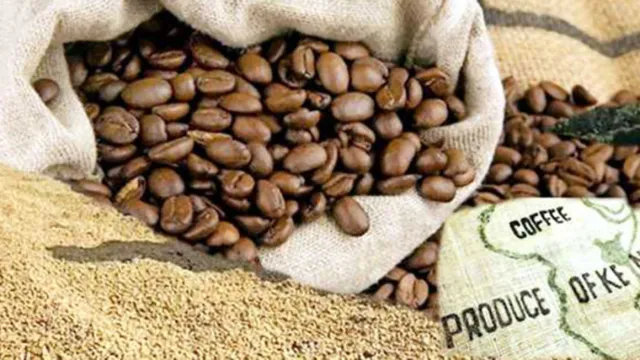
Last year, Kenya's coffee exports to China hit $24.46 million (about KES3.2 billion), reflecting 8.8 percent increase from 2024. With the elimination of tariffs in about a month, millions of farmers stand a chance to earn more.
Kenya will start exporting a wide array of farm produce to China under a duty-free deal starting 1st May, this year.
The tariff-free opportunity is a huge victory for farm produce exporters, who for years have faced a huge fiscal barrier accessing Chinese markets, lowering the competitiveness of their goods due to charges.
Related
Kakuzi launches macadamia oil factory

Shipping woes in the Red Sea cut deep into Kakuzi’s 2024 profits
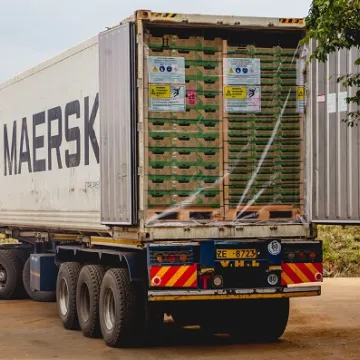
The deal forms part of a wider Chinese arrangement granting all 53 African nations that run diplomatic relations with Beijing duty-free access to its market from 1st May, 2026.
Under the current set up, Kenya's tea and coffee exporters pay between 6 and 15 percent tariff. Macadamia, another high value crop in Kenya, is taxed at between 10 and 15 percent even as vegetables and other horticultural crops face up to 25 percent duty. What's more, cut flower exports face roughly 4 percent in tariff.
However, starting May, all these duties will vanish, offering tonnes of Kenya's tea, coffee, cut flowers, herbs, macadamia, avocadoes and vegetables entry into the market of 1.4 billion people at zero duty.
In an update on Monday, Agriculture Cabinet Secretary Mutahi Kagwe and Chinese Ambassador to Kenya Guo Haiyan said the million-dollar opportunity was part of the trade deals secured by President William Ruto during his state visit to Beijing.
Last year, Kenya's coffee exports to China hit $24.46 million (about KES3.2 billion), reflecting 8.8 percent increase from 2024.
Additionally, Nairobi shipped $19.9 million (about KES2.58 billion) worth of avocado and macadamia nuts to the Asian country implying that with the elimination of tariffs in about a month, millions of farmers stand a chance to earn more.
Prioritise value addition
According to CS Kagwe, however, exporters must prioritise value addition in order to reap big from the fast-evolving Chinese market.
"Now that we have duty-free access to the Chinese market, we must maximise it by exporting more value-added agricultural products," the CS urged.
Currently, CS Kagwe is seeking investors from China to establish partnerships with local agro-processing players to facilitate value addition of farm produce.
The minister also directed the Kenya Plant Health Inspectorate Service (KEPHIS) to remain "firm on quality assurance" as part of a bold push to ensure the country's exports meet China's phytosanitary standards.
Speaking to Xinhua, legal scholar Prof. Patrick Lumumba framed Beijing's zero-tariff access not as a handout, but as a high-stakes test on the coherence of economies in Africa.
“In the short to medium term, the most important thing is for Africans to organize themselves. It is an organized Africa that can deal with an organized China," warned Prof. Lumumba.
Further, he noted that China's duty-free access should serve as a “wake-up call” for the continent to strengthen regional integration under the African Continental Free Trade Area (AfCFTA) and harmonize standards.
Without these internal structures, he warned, African nations risk competing against each other in a race to the bottom, selling raw materials rather than leveraging their collective bargaining power.
“It is true that China is trying to be the country that offers an environment that allows for trade,” Prof. Lumumba noted, adding Africa must build the factories and the policy coherence to ensure the value is added at home.
Buffer against U.S. protectionism
The timing of the Kenyan access is also geopolitically significant. As Lumumba points out, China’s zero-tariff policy provides African economies with a buffer against the “disruptions to global trade linked to the United States’ shift toward protectionism”.
His sentiment echo that of Zimbabwean economic analyst Dereck Goto, who notes that for African exporters, the policy “carries broader geopolitical significance,” reinforcing China’s role as a partner of the Global South and offering a trade-based development pathway distinct from conditions set by the West.