How serene beach plots, tourists, retirees and jobs are reshaping coast land prices
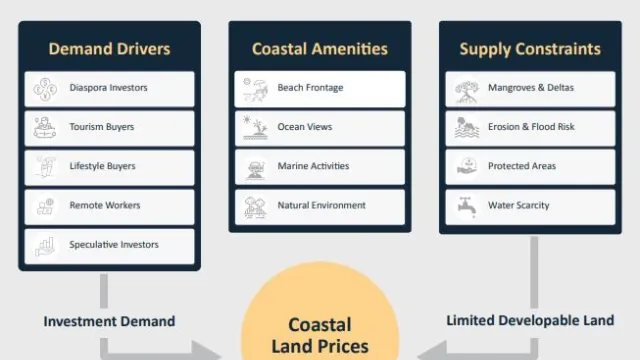
Land prices along Kenya's coast is benefitting from "beauty premium," a unique attribute conferred to the zone's natural aesthetics including width of the beach, clarity of ocean waters and often times, access to unspoiled shorelines.
Kenya's sunny white sand beaches have for decades attracted holidaymakers from across the globe, but a new report shows the rise of remote jobs and diaspora buyers is driving land demand along the country's coastline.
According to the inaugural Hass Coast Land Price Index, an increasing number of wealthy retirees are seeking beach plots, even as remote workers settling on Kenya's shoreline push up asset value in the area.
Related
Uncertainty grips Nairobi's land market as house prices falter
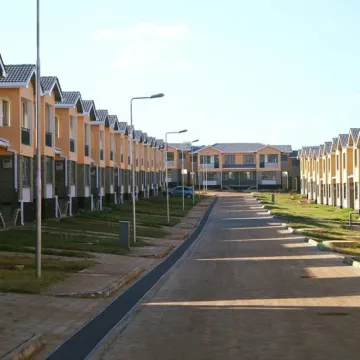
The survey, which covers a dozen towns shows that land prices along the coastline surged by 40.7 percent between 2020 and 2025. During the period, Diani experienced a jaw dropping 79.1 percent increase, Watamu 70.4 percent, Lamu 59.7 percent, Malindi 22.9 percent even as Vipingo posted 24.7 percent rise in prices.
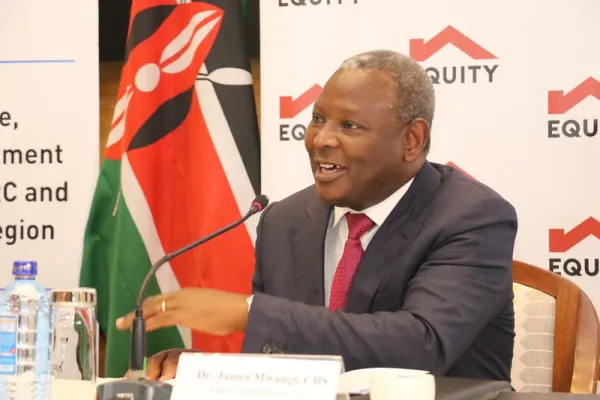
“Coastal land has delinked from general economic trends in Kenya on new dynamics during the 2020s,” explained Sakina Hassanali, Co-CEO of HassConsult, at the index launch in Nairobi.
She added: “Across remote working, retirement relocation, and the long tail of international and domestic buyers who first discovered the coast as tourists, it has developed its own distinct land dynamics.”
Serene beach destination a top selling point
According to property market tracker HassConsult, land along the coast is benefitting from "beauty premium," a unique attribute conferred to the zone's natural aesthetics including width of the beach, clarity of ocean waters and often times, access to unspoiled shorelines.
The report shows that the coast's "beauty premium" could be outweighing traditional attributes on land value such as access to urban centres, and transport corridors.
Take the case for land in Nyali for instance. Currently, sellers with beach fronts enjoy upto 19 percent premium in pricing. Plots of land just a row from the shoreline trade at roughly 9 percent below the average. Increasingly, a direct view of the ocean has evolved into one of top value point in the land market, HassConsult notes.
Another trend shows that the most usable beaches experienced the fastest increase in land prices. Diani, which carries a beach width of between 30 and 80 metres, and is highly usable posted 2.3 percent uptick in value between October and December last year. Watamu, which enjoys 20-70 metre stretches of the beach, often broken by bays, saw an annual appreciation of 4.3 percent.
In the converse, Malindi which presents narrower and less striking beach fronts of between 15 and 50 metres covered by darker sand and less reef protection registered 22.9 percent increase in value over the five years.
“Professionals moving to the coast to work remotely, or relocating from all over the world to enjoy leisured retirements, simply will not buy when land titles are uncertain or water precarious,” Hassanali noted.
Tourists turning coast land owners
Another emerging trend is the conversion of visiting tourists to land owners during the period under focus. Kenya's coast attracts roughly five million holidaymakers, both domestic and international, each year.
According to HassConsult, between 20 and 30 percent of returning holidaymakers develop "place attachment," and tend to buy plots and relocate to the area.
And with shifting global dynamics on work post Covid-19 economic fallout, the emergence of remote jobs is supercharging the conversion of tourists into new residents at the coast.
What's more, the report notes that 4G coverage along the coast, plus 5G in Mombasa and fibre in Watamu and Malindi, has removed significant technical barriers, enabling more people under remote work plans to stay there.
Additionally, an increasing number of retirees, who are shopping for better neighbourhoods and areas of stay along the coast, are offering a fresh pipeline of land buyers. Also, Kenyans living and working abroad have shown increased preference for shoreline properties.
Kenya has a finite stretch of 536km of coastline. Out of this, roughly 30 percent of it is excluded from development owing to the presence of mangroves, sand dunes, river deltas and protected forests.
This leaves barely 375 sq km of prime beach-adjacent land, far less than the area around Nairobi city county where tracts of farmland on the periphery can be converted to housing.
Other challenges gripping the land segment business along the coast is scarcity of water. Quite often, saline boreholes drastically cut land values by about 15 percent.
Also, access to title deeds remains a huge impediment to both acquisition and development especially in Kwale and Kilifi areas. This has left only small zones in Nyali, Bamburi, Diani and Vipingo taking up virtually all property development projects.
Mombasa land prices grow marginally
HassConsult report shows that the Coasts economic hub Mombasa saw land prices grow marginally at 1.3 percent last year owing to rising congestion, flooding, and pressure on the current infrastructure system. On average, an acre of land is going for KSh91.3 million in Mombasa.
In 2025, Kilifi town experienced the fastest jump in prices at 8.8 percent although from a lower base of Ksh26.2 million per acre. This rise is attributable to a spillover of buyers from Mombasa as well as the development of new infrastructure systems such as roads.
Bamburi, with its more affordable beachfront access (KSh57.9 million per acre vs Nyali’s KSh114 million), rose 56.6 percent over five years, attracting mid-market buyers and developers. However, the index notes that Bamburi’s quarterly change turned negative in Q4 2025 (-1.1 percent), suggesting a possible plateau.