Safaricom advances purpose-led policy with green bond and renewables push
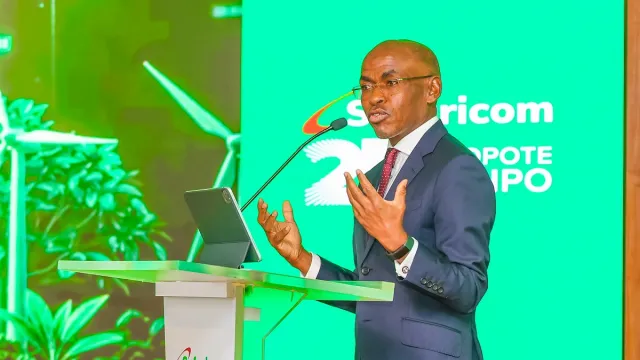
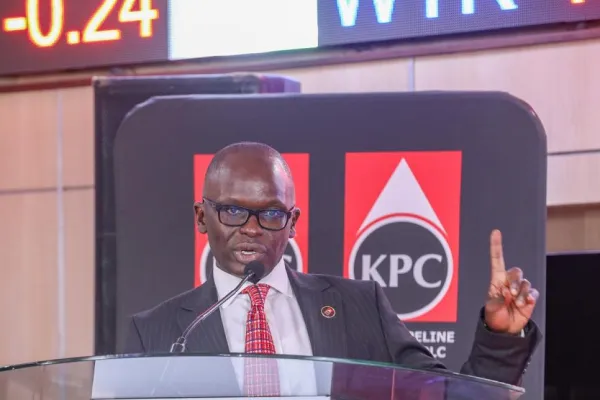
Safaricom Group CEO Peter Ndegwa.
Tech giant Safaricom Plc completed its first dedicated double materiality assessment, identifying five overarching material matters that now organise its sustainability strategy and reporting, the firm's 2026 Sustainability Report shows.
The Nairobi Securities Exchange (NSE)-listed company is progressively aligning is sustainability disclosures with global reporting standards IFRS S1 and S2 ahead of Kenya’s mandatory adoption for periods beginning on or after 1st January next year.
Related
M-PESA propels Safaricom green bond retail uptake

BURN ignites change with Sh1.5 billion green bond for clean cooking
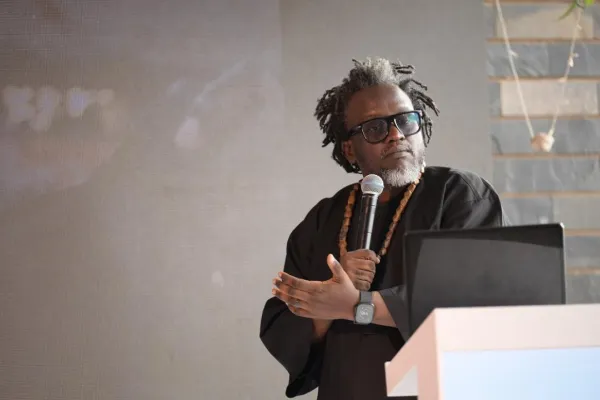
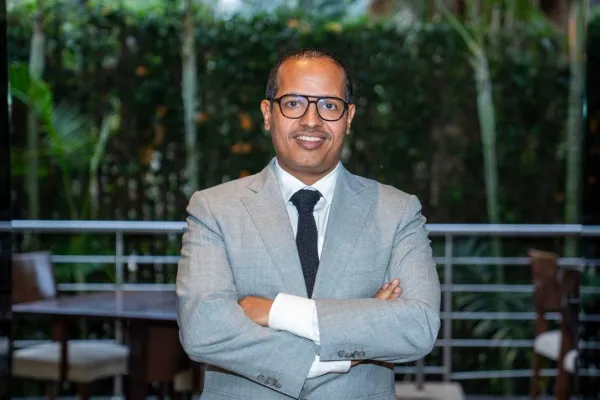
During an investor briefing held on Tuesday, Safaricom board Chairman Adil Khawaja and Group Chief Executive Officer Peter Ndegwa both cited the integration of purpose with commercial strategy.
Additionally, the telco's sustainability executive Karen Basiye noted that sustainability has moved from a peripheral concern to a core driver of decision-making, risk management and capital allocation.
One of the firm's standout development during the period under review was the successful launch of a KES 20 billion tax-exempt green bond under the company’s KES 40 billion Domestic Medium-Term Note Programme.
The bond, which was oversubscribed at 175.7 percent, demonstrated investor appetite for financial instruments that are aligned with Safaricom’s sustainable funding framework, the company noted.
Carbon disclosure
On climate, Safaricom secured an A rating from the Carbon Disclosure Project for the second consecutive year, placing it among the top 4 per cent of companies across the globe.
What's more, Safaricom developed a 2035 Decarbonisation Strategy and Climate Transition Plan aligned with the Science Based Targets initiative pathway and a 1.5°C trajectory, reinforcing its longer-term ambition of net-zero emissions by 2050.
Additionally, the deployment of renewable energy systems advanced during the year, with 596 additional sites converted, bringing the total to 2,028 solar-powered sites across its markets. This lifted the share of the network powered by green energy to 35.7 per cent.
However, the management noted that the rollout of solar energy systems progressed more slowly than planned in the year because of contracting delays, though deployment has since accelerated, with a target of 3,000 sites by the end of the current financial year.
"We want to be number one in net promoter score, reduce diesel use to fewer than 10 per cent of our sites," explained CEO Peter Ndegwa.
On reforestation efforts, the teclo added 681,284 indigenous trees in the period, taking the cumulative total to three million and restoring more than 3,000 hectares of land.
Circular economy measures resulted in the collection and recycling of 230 tonnes of network waste, achieving a 9.7 per cent solid waste recycling rate that exceeded the annual target.
Water withdrawal declined 29 per cent while scope 1 and 2 emissions for the Kenya operations rose 9.1 per cent, reflecting the tension between network growth and emissions reduction that the board has flagged for continued attention.
Customer base
Safaricom's 2026 Sustainable Business Report, which covers the financial year to 31 March 2026 shows taht group 90-day active customers reached 71.56 million, with Kenya contributing 57.9 million and Ethiopia 13.6 million.
"We expect Ethiopia to reach break-even during FY27 as we work towards a customer base approaching 20 million," Dr. Ndegwa added.
M-PESA customers in Kenya stood at more than 41 million, while mobile data customers totalled 26.94 million. The company reported EBITDA of KShs 233.89 billion and service revenue of KShs 400.79 billion.
"M-Pesa has fundamentally expanded financial inclusion, but inclusion alone is not enough. Financial health also depends on people being able to save, invest, insure themselves, their families and wealth, build greater resilience to financial shocks ... there is considerable opportunity to use technology to make a wider range of financial services accessible," explained Dr. Ndegwa.
In Ethiopia, the new frontier market recorded strong customer growth and network expansion, with coverage reaching 59.2 per cent and more than 3,500 sites in service. The group positions Ethiopia as a significant long-term growth opportunity alongside its established Kenyan franchise.
Social impact
Through the Safaricom and M-PESA Foundations, the company invested KEs 10.2 billion across projects in all 47 Kenyan counties, positively impacting a total of 4.4 million lives in health, education, environmental conservation, economic empowerment and humanitarian response.
The firm's flagship initiatives include the Citizens of the Future programme, which aims over five years to build or refurbish 500 schools, award 10,000 scholarships to learners and equip 56,000 teachers with digital skills for the future.
Disclosures show that to date seven schools have been completed while 65 are under construction. A total of 4,500 scholarships have been awarded while 18,000 teachers have received relevant training.
On its workforce, the metrics show that women represent 49.6 per cent of its overall workforce, alongside a 3.9 per cent representation of persons with disabilities that met the company’s target.
Supply-chain diversity included KES 6.0 billion of spend directed to special interest groups, earning recognition at industry awards. The company also maintained strong governance scores, including high marks in corporate governance assessments and an ISO 27001 certification for privacy information management.