KCB screens nearly Sh588 billion loans to drive green lending
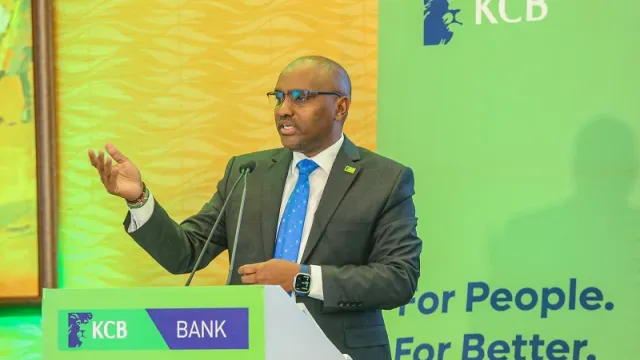
KCB Group CEO, Paul Russo.
KCB Group disbursed KSh48.8 billion in green financing loans to support environmentally sustainable projects in renewable energy, sustainable agriculture, green buildings, clean transportation, water management and climate-smart investments.
Out of this, KSh9.9 billion was independently verified as climate-eligible using the Climate Assessment for Financial Institutions (CAFI) tool.
Related
Family Bank to exercise Sh1 billion green shoe option on oversubscribed bond

KCB Group deepens sustainable finance with Sh53.2Bn in green loans
At the same time, the lender screened KSh587.9 billion worth of transactions under its Environmental and Social Due Diligence framework covering operations across Kenya, Uganda, Tanzania and Rwanda as part of its commitment to accelerating the transition toward a low-carbon economy.
The milestone enabled the Group to surpass its strategic target of allocating 25 percent of total lending to green projects, reaching 25.84 percent in 2025, up from 21.6 percent in 2024.
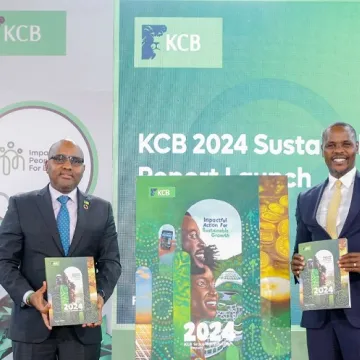
The disclosures are contained in the 2025 KCB Group Sustainability Report themed “Transitioning Economies” marking a defining moment in the Group’s strategic journey to position sustainable finance as a driver of inclusive economic transformation across East Africa.
Commenting on the progress, KCB Group CEO, Paul Russo noted that the Bank is intentionally aligning its financing decisions and business strategy to support climate resilience and sustainable enterprise growth as a catalyst for long-term economic prosperity, environmental stewardship, and inclusive development across the markets in which it operates.
“KCB seeks to be a bigger player in shaping a robust and sustainable financial ecosystem throughout East Africa by continuously developing tailored green financing solutions for MSMEs, households, and corporates in order to support the adoption of sustainable practices across key sectors. This will be enabled through strengthened partnerships with global climate financiers to mobilise capital at scale, product innovation and accelerate the transition to a low-carbon and climate resilient economy throughout the region,” said Russo.
Beyond financing, the Group continued to invest in practical environmental conservation initiatives through the ongoing tree growing campaign which has become a significant milestone in supporting Kenya’s national climate action agenda and ecosystem restoration efforts.
In 2025, the Bank surpassed its 2025 target of 1.5 million trees to plant more than 3.5 million trees. This achievement was driven by over 200 regionwide tree planting events, in collaboration with 1,778 schools and other partners.
The Group also made significant strides in advancing clean energy, particularly within the education sector through the Learning Institutions Customer Value Proposition (CVP) where the Bank supported 266 schools in adopting cleaner cooking systems, backed by KSh782.5 million in financing, accelerating the transition away from traditional biomass fuels.
During the year, KCB also scaled its solarization agenda with installations now operational in 16 branches across the Group. Some of the branches benefiting from the initiative include Maasai Mara, Wajir, Mandera, Watamu, Lamu, Loitoktok, Kakuma, and Namanga, as well as the Karen Leadership Centre.
The Group plans to expand solar power to 30 additional branches this year, further accelerating its shift toward cleaner energy sources.
As a result, KCB registered a 2 percent reduction in resource use for fuel and electricity, contributing to an overall 13 percent reduction in emissions across the Group.
This highlights the Group’s continued focus on environmental sustainability through renewable energy adoption and operational efficiency initiatives aimed at reducing its carbon footprint and supporting the transition toward cleaner energy sources.
Through the KCB Foundation programmes, over 265,300 jobs were supported, while 16,549 youth benefited from workforce readiness and skills development initiatives designed to enhance employability and enterprise growth.
In addition, 38,635 youth-led businesses received structured business development support under the 2Jiajiri Young Africa Works programme, helping young entrepreneurs build sustainable enterprises and livelihoods.
The Group has supported a total of 67,090 businesses, as part of its broader vision of driving inclusive economic transformation, empowering communities, and expanding opportunity for individuals and enterprises across all segments of society.
The Group further advanced its inclusive financing agenda by disbursing KShs. 149 billion to women-led businesses through the Female-Led and Made Enterprise (FLME) programme, a key pillar of its broader five-year commitment to unlock KSh250 billion in financing for women entrepreneurs and enterprises.
In addition, KCB continued to deepen financial inclusion efforts among displaced and underserved communities, with 20,299 refugees gaining access to formal banking services. Leveraging UNHCR identification documentation, KCB has disbursed KSh71.4 million in loans to refugee entrepreneurs, enabling them to establish and grow businesses while supporting their economic participation and integration within local communities.
The report marks the lender’s third sustainability report to undergo a limited assurance review. Prepared in reference to the IFRS S1 and S2 Standards and published alongside the 2025 Integrated Report, it demonstrates the Group’s voluntary early adoption ahead of the mandatory deadline set for the 2027 reporting period.