Mrima Hill tender row tests Kenya's mining governance rules
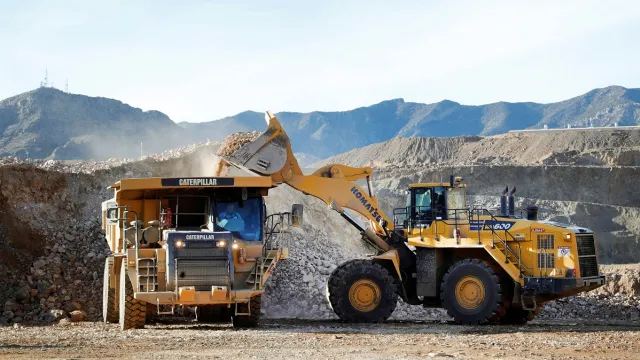
Kwale-based Mrima Hill deposit is considered one of the world's most significant undeveloped rare earths resources, containing high concentrations of niobium, which is a critical mineral used in aerospace, defence, and energy technologies, alongside rare earth elements vital for electric vehicles, wind turbines, and electronics.
The global scramble for the tender to extract KES8 trillion worth of rare earth minerals in Kwale-based Mrima Hill has intensified with the Australian miner that was ranked second filing a formal complaint agaisnt the winner, Frontier Minerals.
In an application to Public Procurement Regulatory Authority, Australia miner RareX argues that its rival, Frontier Minerals Consortium, presented its bid well past the final date set by Kenya's ministry of mining for the lucrative tender.
Related
US-led consortium secures Sh8 trillion Mrima Hill mining project
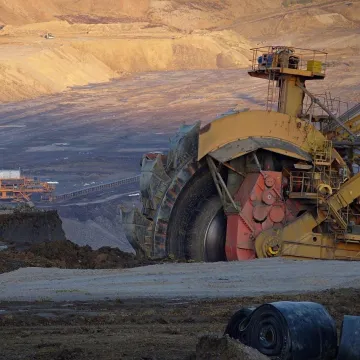
RareX faults Mrima Hill tender award to US firm citing breach of process
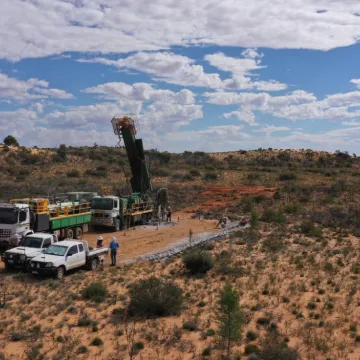
In an update on Friday, the Australian miner, which is leading the RareX-Iluka consortium, confirmed on Tuesday that the Public Procurement Regulatory Authority (PPRA) received its complaint on 24 November.
The case, which pits mining giants from the U.S. and Australia, is poised to put to the test the country's dispute resolution mechanims in its nascent mining industry
At the heart of the complaint are complaints that Expressions of Interest (EOIs) from Frontier Minerals were admitted late in the day.
RareX highlights that Frontier's EOI was not opened on the original tender opening date of 21 April 2026. Instead, it was opened at a separate session that was conducted on 14 May 2026, a session that bidders present at the original opening were not aware of or invited to attend.
"n RareX's view, admitting these Expressions of Interest was inconsistent with the Public Procurement and Asset Disposal Act, its Regulations, the Mining (Award of Mineral Rights by Tender) Regulations, 2017, and Article 227(1) of the Constitution of Kenya," RareX said in part.
"RareX has requested that the PPRA investigate the matter and direct that the evaluation and award be confined to bidders that submitted their Expressions of Interest within the deadline," RareX added in a market update.
Last week, Kenya's ministry of Mining announced that Frontier Consortium, which brings together Frontier Minerals LLC, ReElements, American Resources Corporation, and Bunker Hill Silver Corporation, a grouping with significant US and Canadian backing secured the bid to mine the critical mineral deposits.
The announcement came at a time when increaingly, Washington-backed companies appeared to gain favour with Kenyan authorities for the lucrative deal.
Alongside its complaint to the PPRA, RareX has formally requested a debriefing from the Principal Secretary of the State Department for Mining.
The request, delivered on 23 November 2026, seeks the consortium's technical and financial scores, broken down by criterion and evaluator, together with the full procurement records for both the EOI and Request for Proposals stages.
Under the Notification of Intention Award, the debriefing is due within five business days of receipt.
"Once it has received the debriefing and the information requested, RareX will consider its position with its Kenyan legal advisers."
Contract signing
The standstill period, a mandatory pause before contract signing that allows unsuccessful bidders to challenge the award, will be extended by five business days if the debriefing is not provided within that timeframe. This gives RareX a narrow but critical window to press its case before the deal is finalised.
RareX, which is listed on the Australian Securities Exchange, is arguing that its proposal is the most suitable for Kenya for several reasons.
The consortium says its bid was structured from the outset around community and cultural heritage priorities, with social and environmental considerations central to its plans for Mrima Hill, a site of significant cultural sensitivity.
The company also cites its governance standards, noting that both consortium members are ASX-listed and subject to one of the world's most rigorous continuous disclosure regimes for mining companies.
Iluka Resources, RareX's partner in the Mrima Hill bid, is a major player in the global rare earths supply chain and is currently constructing the A$1.65 billion (about KES 143 billion) Eneabba Rare Earths Refinery in Western Australia, with substantial support from the Australian government.
Crucially, the consortium's proposal includes provisions for beneficiation and refining within Kenya, with the resulting product initially separated into rare earth oxides at Eneabba before being further processed.
This value-added component is likely to be a key selling point for Nairobi, which has been pushing to move beyond raw mineral exports and develop downstream industries.
Kwale-based Mrima Hill deposit is considered one of the world's most significant undeveloped rare earths resources, containing high concentrations of niobium, which is a critical mineral used in aerospace, defence, and energy technologies, alongside rare earth elements vital for electric vehicles, wind turbines, and electronics.
RareX-Frontier Minerals dispute comes at a sensitive time for Kenya, which is seeking to position itself as a reliable supplier of critical minerals to Western allies while balancing its relationships with China, the dominant player in rare earth processing.
The outcome of the PPRA review could have implications beyond the Mrima Hill project, signalling how Kenya manages disputes in its nascent mining sector.
RareX said it remains committed to developing Mrima Hill in partnership with Kenya and its communities, and that it respects the due process provided for under Kenyan law. However, the company cautioned that there is no certainty its complaint will succeed or that the project will ultimately be awarded to the RareX-Iluka consortium.