Kenya seeks financiers for Sh154bn JKIA expansion after botched Adani deal
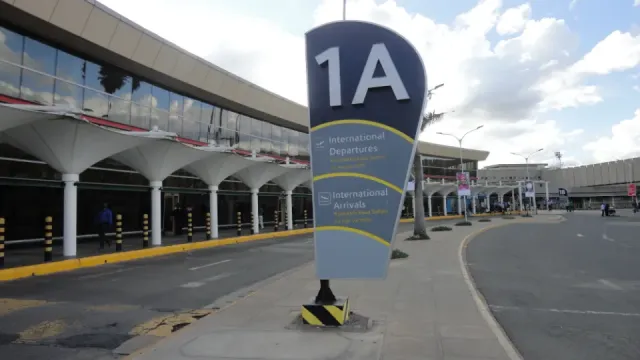
JKIA's expansion encompasses the rehabilitation of existing airfields, the renovation of current terminals to increase capacity to 12 million passengers annually, and the construction of a new "green field" terminal capable of handling 10 million passengers per year
The government is moving to finalise a KSh154.2 billion (about $1.2 billion) financing package for the modernisation of Jomo Kenyatta International Airport (JKIA) as Nairobi seeks to secure its position as East Africa’s premier aviation hub while avoiding the public debt pitfalls that have complicated past infrastructure megaprojects.
According to a project brief released by Transport Cabinet Secretary Davis Chirchir on Thursday, the government has tapped Trade Development Bank (TDB) and the African Finance Corporation (AFC) as lead arrangers to structure the financing for the ambitious expansion, which aims to boost JKIA’s annual passenger capacity from 7.5 million to 22 million.
Related
Scandal-ridden Adani Group eyes JKIA expansion deal
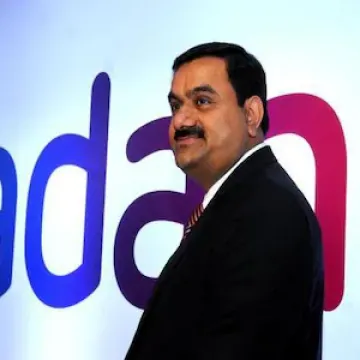
Sh32Bn graft suit in US forces Ruto to drop Adani contracts
The financing strategy hinges on leveraging airport-based revenue streams rather than direct sovereign guarantees, with the arrangers tasked with crowding in development finance institutions and commercial banks to fund the estimated KShs 154.2 billion ($1.2 billion) project.
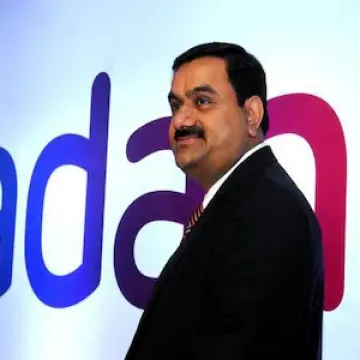
Initiative comes nearly 18 months after President William Ruto cancelled a controversial $1.8 billion deal with India's Adani Group, which would have seen the conglomerate operate the airport for 30 years.
That decision, which was prompted by the indictment of Adani’s founder in the U.S amid protests in the country, left Nairobi scrambling for alternative funding models and facing a KSh243 million legal bill from the botched privatisation attempt.
Mr Chirchir’s briefing, which outlines the project’s three core components, offers official account of the government’s procurement strategy since the Adani debacle.
Construction of new green field
The expansion encompasses the rehabilitation of existing airfields, the renovation of current terminals to increase capacity to 12 million passengers annually, and the construction of a new "green field" terminal capable of handling 10 million passengers per year.
The government insists the procurement process, which closed on May 14, was conducted through an open international competitive bidding process in full compliance with the Public Procurement and Asset Disposal Act.
Mr Chirchir noted that every stage of the tender had been undertaken "fairly, transparently and in strict compliance" with regulations, a pointed statement likely aimed at quelling memories of the opaque Adani negotiations.
However, the financing details remain a work in progress. While the TDB and AFC are on board as lead arrangers, the government has yet to disclose the full composition of the lending syndicate or the specific terms of the securitisation structure.
The strategy mirrors a broader shift in Kenya’s infrastructure financing approach, moving away from traditional sovereign-backed loans towards project-specific revenue-based models to manage public debt pressures.
The project’s economics are also under scrutiny. Mr Chirchir defended the anticipated construction cost, arguing that benchmarking against comparable regional airport developments shows the investment to be "competitive and reasonable" for a project of this scale and complexity.
The government is also planning to develop an "Airport City" and a Special Economic Zone around the expanded facility, aiming to maximise the economic value of the aviation hub beyond aeronautical operations.
Opacity of current process
The expansion is driven by pressing capacity constraints. JKIA currently handles approximately 8.93 million passengers annually, well beyond its designed capacity of 7.5 million and forecasts project passenger numbers will rise to 22.31 million by 2045. Air cargo is expected to more than double over the same period, from 407,214 tonnes to 860,400 tonnes.
Yet, the project is not without political and legal risks. The procurement process has attracted significant controversy, with recent reports in the Standard newspaper drawing a sharp rebuke from Mr Chirchir, who denied that a company mentioned in those reports had any involvement in the tender.
Civil society groups and legislators have also expressed concerns about the opacity of the process, threatening legal action to compel the government to disclose details of the winning bidder, which some sources suggest is a Chinese firm in collaboration with controversial Zimbabwean Wicknell Chivayo.