Kenya in deal with Pfizer to cut cancer costs, deliver therapies fast

President William Ruto (right) with Pfizer Chairman and CEO Albert Bourla at State House Nairobi following the signing of cancer management plan between Kenya and the U.S. drug manufacturer.
Health authorities in Kenya have announced the signing of a deal with U.S. drug manufacturer Pfizer to accelerate the availability of drugs and therapies on leading cancers in the country as calls to fight the disease intensifies.
In an update late Monday, authorities from the Ministry of Health said the new collaboration between the country and Pfizer is poised to cut "what would be a 10 year wait" before emerging treatments are available across hospitals in Kenya.
Related
Pfizer calls for regular screening for early breast cancer detection in Kenya

Aga Khan hospital unveils region’s most advanced prostate cancer scan
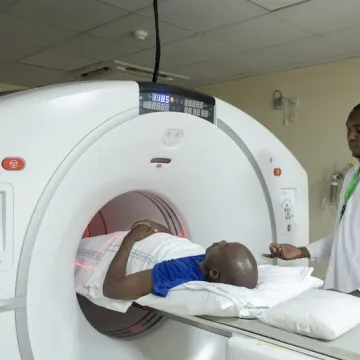
Additionally, families bearing heavy costs could enjoy some relief as the Kenya-Pfizer agreement promises a reduction in costs from high of KSh1 million to roughly KSh50,000 for some cancer management procedures.
"Kenya has made a major breakthrough in the treatment of several cancers following the signing of a consequential agreement with Pfizer, a United States multinational pharmaceutical and biotechnology corporation," President William Ruto noted on X (formerly Twitter).
He added: "Prices of medicines for the treatment of breast, stomach, colon, lung, prostate, esophagus, leukemia, lymphoma and multiple myeloma cancers have reduced remarkably by more than 7 times."
Dr Ruto noted that the agreement between Pfizer and the Kenya Medical Supply Authority (KEMSA), dubbed Accord for a Healthier World, is poised to will make the KSh 800,000 Social Health Authority (SHA) cancer package fully adequate without additional cost to patients.
According to the National Cancer Institute of Kenya, breast, cervical, prostate, and esophageal cancers are the most common in the country where authorities are managing nearly 50,000 new cases annually. Already, the institute is recording over 32,000 cancer related deaths per year.
Currently, breast cancer is the most common cancer among women in Kenya, accounting for roughly 23.3 percent of all cancer cases or 6,799 women annually. This disease has a mortality rate of about 3,107 per year, the institute notes.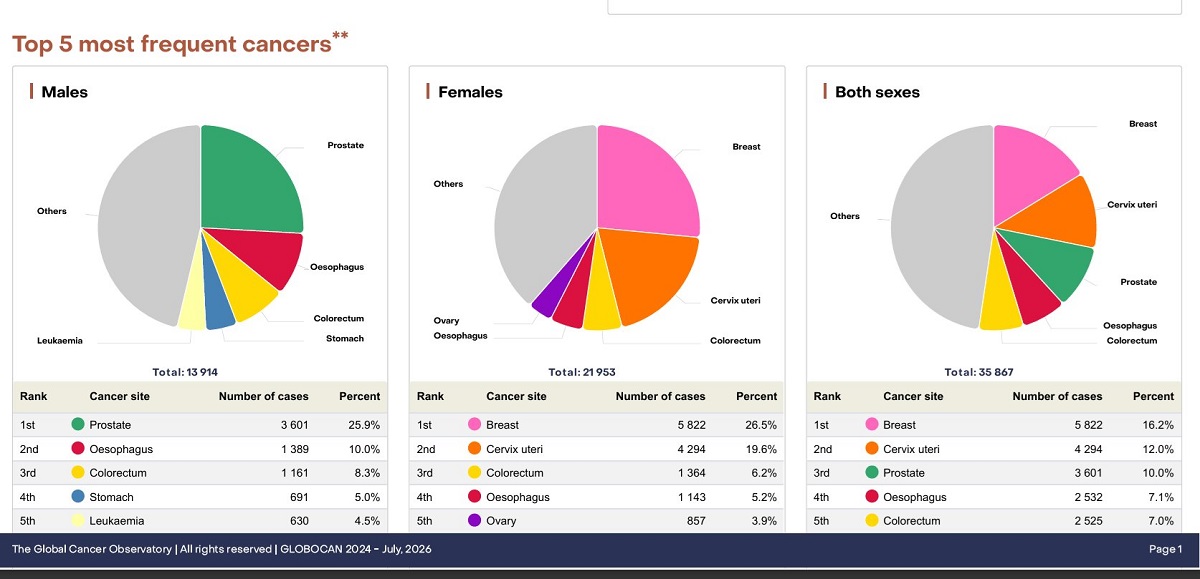
Cervical cancer is the second most common cancer among women in the country, responsible for 19.7 percent of all female cancer cases while prostate cancer accounts for about 14.4 percent of all male cancer cases.
What’s more, esophageal cancer is particularly prevalent in certain regions of Kenya, notably among communities that consume hot beverages and tobacco. It represents about 11.7 percent of all new cases in the country.
In January this year, the U.S. drug manufacturer under its social impact arm unveiled a three-year, $10 million push to expand access to timely breast cancer diagnosis, treatment, and care targeting patients in Kenya and Ethiopia.
"This funding will support efforts in Kenya by the Academic Model Providing Access to Healthcare (AMPATH), and in Ethiopia by Innovations in Healthcare in partnership with the Clinton Health Access Initiative (CHAI), Pfizer explained in a statement.
It said that it shall roll out the plan by working with national ministries of health, the partners seek to improve breast cancer care by promoting earlier diagnosis and helping address barriers that delay or prevent women from accessing treatment.