Catholic bishops flag rising goonism, SHA chaos and 'normalised corruption'
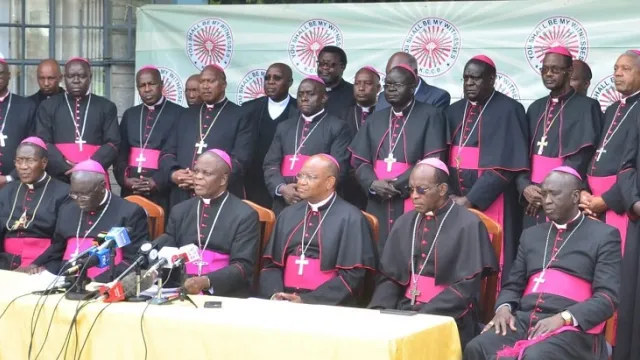
Led by Chairman Bishop Maurice Muhatia Makumba (Nakuru Diocesse), the 29 leaders of the Catholic Church in Kenya called out the country's political class, noting that "goonism, insults, and hateful messages" have seen leaders throw civility out the window.
The Catholic Church in Kenya has issued a searing indictment on President William Ruto's administration, accusing senior government officials of sponsoring goons and presiding over education and healthcare systems hollowed out by corruption and impunity.
In an explosive letter issued on Thursday, the Kenya Conference of Catholic Bishops (KCCB) faulted President Ruto, noting that the country was sliding into a "primitive culture of goons" as political elites traded insults in public, in full glare of children.
Related
Auditor-General flags Sh104Bn SHA system deal as risk to public funds
“We are disappointed and embarrassed over the recent grossly indecent public utterances of our national leaders and those in the opposition,” KCCB's statement, released after their meeting in Nairobi notes. “This is totally unacceptable.”
Led by Chairman Bishop Maurice Muhatia Makumba (Nakuru Diocesse), the 29 leaders of the Catholic Church in Kenya called out the country's political class, noting that "goonism, insults, and hateful messages" have seen leaders throw civility out the window.
Rising cases of goonism
KCCB faulted emerging pattern of patronage whereby leaders are actively recruiting young jobless youth to cause chaos in meetings, intimidate opponents, and even kill wananchi.
“These goons work for their paymasters who can easily be identified by our criminal investigators,” the Bishops noted, adding: “It is happening in the sight of those in charge of security in our country and even our law enforcers.”
The church said there is a close relationship between ongoing cases of impunity and the abduction incidences that remain unresolved, a trauma that is still fresh in many families.
“Our young people are still living in the trauma of abductions and life threats,” the church heads stated. “We must ensure that all Kenyans enjoy their personal freedom and do not live in the fear of any threats to their lives or freedom.”
They cautioned that politics “is not entitlement, but an obliging responsibility and service to the people,” and demanded that one must remain “civilised in their language”.
SHA system remains 'poor'
On healthcare, the Catholic church noted that its affiliated hospitals are grappling with up to KSh5.7 billion in debt under the newly introduced Social Health Authority (SHA) system for services rendered, a situation that threatens to cripple operations. They noted that this ballooning debt excludes another KSh 3.3 billion in unpaid dues to church-affiliated institutions under the defunct National Hospital Insurance Fund (NHIF).
While noting that there have been "positive signs" following the government plan to honour claims to faith-based hospitals recently, the overall performance of SHA remains "poor."
Recently, the National Assembly’s Health Committee reveled that SHA scheme is riddled with "serious shortcomings." The Bishops called on the Ministry of Health to guide on the role of the Digital Health Authority in managing claims.
Additionally, they challenged the government to fix, "structural deficits, underfunding, and operational deficiencies, including technological system downtime” across Kenya's healthcare system.
“We should not continue going in circles at the expense of human life in need of medical care,” the bishops said.
Education: CBE suffers from improper design
With the Catholic Church being a major stakeholder in Kenya's education, the Bishops faulted the Competency-Based Education (CBE) system, noting that learners are under “constant mode of experimentation” because the new system lacks proper design.
“What is obvious is that there was little study, design and thinking-through of the entire CBE system,” the Bishops said.
According to the Church, CBE was structured to focus on practical skills training, creativity, and critical thinking. However, practice shows that the system is “capital-intensive,” demanding that schools hire more teachers, buy extra equipment, amid constrained financing from the government.
They called on the Ministry of Education to urgently constitute a multi-sectoral team to evaluate and redesign the system’s roll-out. Further, they highlighted “serious concerns” with attempts to undermine the role of church sponsors in schools, warning that ethical and value content was being eroded.
'Kenyans have normalised corruption'
At the same time, the Bishops intensified their war on corruption, labelling it a "major threat to human life" and a sin that is getting "normalised" in Kenya. “We Kenyans seem to have normalised greed and corruption. We no longer want to oppose it, or at best we passively accept it."
The church leaders observed that normalising bribery, theft of public resources, and dishonesty directly feeds into the prevalence of “cartels, culture of kickbacks, siphoning of public funds, and stealing of public land and property”.
They added: “We see no serious commitment or intent to fight the monster of corruption. The goodwill to fight corruption from the top is wanting, yet Kenyans continue to pay taxes faithfully.”
At the same time, KCCB raised concerns about the civil registration of marriages, saying that notification and obtaining certificates had turned “unnecessarily arduous”, with a shortage of marriage certificates discouraging couples from formalising unions. They warned that this trend risks depriving “spouses of their legal rights”.
The statement was signed by 29 bishops, including Anthony Muheria (Nyeri), Martin Kivuva Musonde (Mombasa), Philip Anyolo (Nairobi), and others representing dioceses from Marsabit to Malindi.