Britain's BII targets Kenya’s Sh3.1 trillion pension fund to unlock infrastructure investment

British International Investment has launched a new five-year strategy in Kenya calling for stronger partnerships to mobilise domestic capital
UK’s impact investor, British International Investment (BII), has unveiled its 2026–31 strategy in Kenya, building on the $1.2 billion committed across East Africa during its previous five-year strategy period.
Under the new strategy, BII is poised to drive about $6.7 billion of its own capital and mobilise up to $5.3 billion in private capital to invest across Africa.
Related
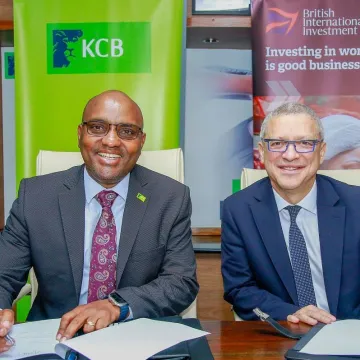
KCB and UK's BII enter into Sh13Bn credit line to empower women, green firms
Safaricom Ethiopia digital infrastructure push gets Sh18Bn funding

“Kenya has a significant pool of domestic capital, and we are calling on local capital providers to partner with us to find practical ways to channel more of it into productive businesses and infrastructure,” explained Leslie Maasdorp, BII CEO.
Maasdrop was speaking during a roundtable, Progressive Capital Partnerships: New Models for Unlocking Local Capital, bringing together key stakeholders to explore practical ways to channel more of Kenya’s domestic institutional capital to support the country’s growth and development.
“We want to use our capital, experience and partnerships to unlock investment from others and help build markets that can attract capital at greater scale,” Maasdorp added.
In Kenya, BII’s push will mean combining investment in businesses and infrastructure with a greater focus on attracting additional institutional capital and creating the conditions for more investment to flow.
As part of this broader approach, BII said it will work closely with local partners to develop markets, strengthen financial systems and address barriers that prevent capital from reaching productive businesses and infrastructure.
Kenya’s pension assets reached KSh3.167 trillion in June 2026, yet just 0.02 per cent was allocated to infrastructure debt instruments and 0.62 per cent to Real Estate Investment Trusts (REITs).
The roundtable discussed approaches that could unlock more of this capital, including local-currency financing, blended finance, risk-sharing mechanisms and capital-market instruments to help manage risk and crowd in private capital.
More broadly, Kenya’s established financial sector and active capital markets position it as an important investment hub for East Africa, where economic growth is projected at around 6 per cent in 2026–27.
BII seeks to build on these strengths to support investment in Kenya as well as explore how successful approaches can be applied across the wider region, including in frontier markets such as Uganda, Ethiopia and Tanzania, which are identified by the UN as Least Developed Countries (LDCs).
BII will convene its 2026 Innovation for Impact Summit, bringing together venture capital investors, fund managers and entrepreneurs from Africa and South Asia.
Now in its fourth edition, the event will create space to exchange cross-market experience, explore opportunities for cross-border investment, and consider how venture capital can support the growth of thriving businesses.
The event will also explore opportunities for venture capital coordination between Africa and South Asia; the future of artificial intelligence and responsible innovation; capital mobilisation and the evolving investor landscape; and climate innovation and emerging investment opportunities across both regions.
UK Minister for International Development and Africa Kirsty McNeill said: “Kenya is one of Africa’s most dynamic economies, with huge potential to create jobs and drive growth.
“I am proud that British International Investment's new strategy is helping the UK to build a new kind of development partnership with Kenya and countries across the continent, focused on unlocking private investment, strengthening financial systems, and working with local partners to deliver on our shared goals."