Acid test for Kenya’s sugar factories’ leasing plan as Comesa safeguards end
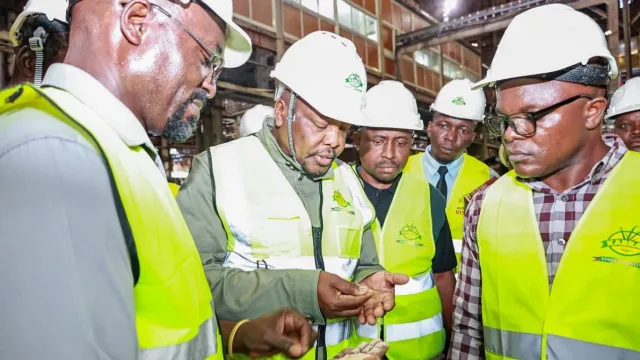
Private investors in Kenya's sugar industry, who are expected to compete in the 21-member Comesa bloc, will be tasked with diversifying the country's sugar factories to produce ethanol and bio-energy among other products.
Kenya has formally terminated its Common Market for Eastern and Southern Africa (COMESA) sugar safeguards after over twenty years, effectively ushering stiff competition for the sweetener from its neighbours, just as a push to lease state-owned millers got underway.
The initiative to lift decades-old Comesa sugar safeguards comes just weeks after officials unveiled plans to lease state-owned sugar mills to private investors for a 30-year period.
Related
Sugar barons dancing on Mumias graveyard

Uganda miller to the rescue of crisis-saddled Mumias Sugar
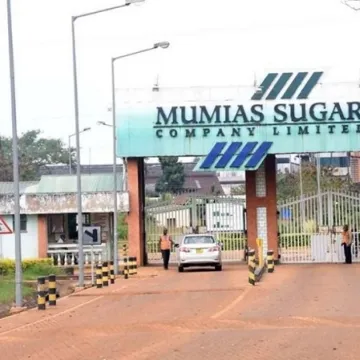
“The measure [safeguards] having lapsed on November 30th, 2025 had fully achieved its objective as a temporary, reform-driven instrument to stabilize and restructure the sector,” Kenya Sugar Board CEO Jude Chesire explained.
Authorities in the Ministry of Agriculture have hailed the termination of Comesa safeguards as proof of new found strength in the country's sugar industry, indicating that the sector can now hold on its own and compete in the market of about 600 million people.
On Sunday, a statement by the Kenya Sugar Board (KSB) noted that that the country has formally exited the COMESA sugar safeguard regime after 24 years, marking a decisive transition for the country's sugar industry.
"Kenya now enters a new phase defined by competitiveness, value addition, regional integration, and sustainable growth, supported by a clear policy framework and a restructured private-sector-led industry," said Chesire.
The exit of the country from Comesa safeguards comes at a time when the State has identified private players to manage government-backed millers Sony, Nzoia, Chemelil, and Muhoroni, whereby the operators will be expected to modernise equipment, and invest heavily in the development of cane.
Additionally, the private investors who are expected to compete in the 21-member Comesa bloc will be tasked with diversifying the sugar factories to produce ethanol and bio-energy among other products.
Besides Kenya, the Comesa bloc is made up of member states: Burundi, Uganda, Madagascar, Malawi, Mauritius, Rwanda, Zambia, Ethiopia, Libya, , Seychelles, SomaliaComoros, Democratic Republic of Congo, Djibouti, Egypt, Eritrea, Eswatini , Sudan, Tunisia, and Zimbabwe, aiming for deeper economic ties via free trade, customs, and common market.
With the opening of Kenya's sugar industry to face competition from producers in the largest trading bloc, authorities in Nairobi will not place any limits on duty-free imports of the sweetener from Comesa nations.
According to the Kenya Sugar Board, the government will embark on safeguarding farmer livelihoods while supporting miller viability in the ccountry.
At the same time, authorities will ensure food security, price stability and long-term growth of Kenya's sugar industry within the COMESA Free Trade Area.
Chesire noted that Kenya's acreage under cane has expanded by nearly 20 percent to 289,631 hectares as increasing number of producers embace the business, supported by favourable weather, access to certified seed cane, and the government-backed fertiliser subsidies.
At the same time, the ountry's sugar output has expanded by 70 percent to 815,454 metric tonnes at the moment from 472,773 metric tonnes in 2022 on account of improving productivity and milling. Kenya's sugar consumption averages 1.1 million metric tonnes annually.
"While domestic production has made significant gains and is increasingly aligned with national consumption, miller capacity expansion, factory rehabilitation, and newly leased mills will require time to fully optimize operations," Chesire said.
Kenya's sugar industry, which is largely conentrated in the western belt and some pockets in the Rift Valley and the Coast, supports 250,000 direct.
The medium-term outlook for the sector remains strong, Chesire said, noting that as miller capacity expands and farm productivity continues to improve, Kenya is projected to not only meet domestic demand but to attain and surpass self-sufficiency in the medium term.
Over the years, authorities in Nairobi have been securing safeguards through the COMESA Council of Ministers, enabling the country to undertake measures to re-structure its sugar sector to attain competitiveness.