Mbadi defends Government’s 15% Safaricom sell-off to Vodacom
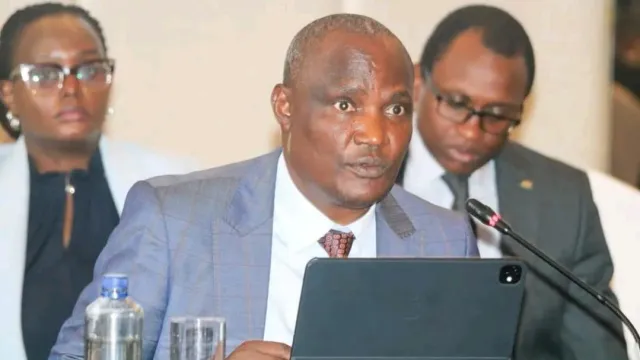
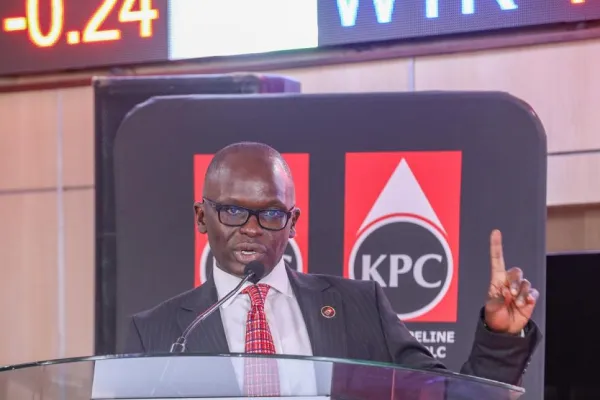
The National Treasury CS John Mbadi speaking to the Joint Committee of the National Assembly on Tuesday.
The Kenyan Government plans to sell a 15 percent stake in Safaricom PLC to Vodacom while retaining a significant shareholding, Treasury Cabinet Secretary John Mbadi has announced.
Speaking to the Joint Committee of the National Assembly, Mbadi explained that the transaction will protect the Government’s investment from future dilution and unlock maximum value from an asset carefully built over more than 25 years.
Related
Vodacom tightens its grip on East Africa with bigger Safaricom stake
“The key benefit that the Government of Kenya shall derive from the divestiture is to mitigate the risk of future dilution due to capital requirements by the business,” the Treasury CS told MPs on Tuesday.
He added, “Given the prevalent erosion of fiscal space, companies that are controlled fully by Government might not be able to undertake investments even in the cases where there is proven certainty of payoffs or enhancing efficiency as the debt carrying capacity of the sovereign is diminishing.”
Following calls to scrutinize the transaction, the National Treasury was the first institution to meet the MPs on the Departmental Committee on Finance and National Planning jointly with the Select Committee on Public Debt and Privatisation. The joint committee is set to meet interested parties as part of public participation on the transaction, which has already been approved by the Cabinet.
With Vodacom, which is 65 percent owned by Vodafone, Mbadi said, the Government is guaranteed hard cash, minimal disruption to the business, continuity in the success of Safaricom, and a long-term partner that can take higher and long-term risks.
“This transaction eliminates any settlement risk, as Vodacom has a strong financial capacity and proven track record in completing similar investments,” said Mbadi.
Vodacom has proven itself a credible and long-term strategic partner in Kenya, having first entered the market in 1998 as Vodafone and remained invested ever since. In contrast, Safaricom’s main competitor has changed hands four times over the past 25 years.
The Cabinet Secretary assured that the Government will retain strong oversight of this strategic asset through its 20 percent shareholding, while mature independent regulators, including the Communications Authority, the Central Bank, the Office of the Data Protection Commissioner, and the Competition Authority, will continue to ensure full accountability.
“This is one business area where commercial and regulatory functions are very distinct, hence shareholding is no longer a material Government tool of control,” Mbadi said.
The Government also negotiated safeguards: two seats on the Safaricom board, continuity in governance, retention of the name and brand, no acquisition-related redundancies within three years, ensuring the chairman, CEO and independent directors remain Kenyan and continued support of the Safaricom Foundation.
Mbadi told the committee that the KES34 per share was the best price and was settled on after assessments using various metrics. The Treasury’s advisors on the valuation were the Kenya Commercial Bank Investment Bank, which gave a valuation report detailing various valuation methodologies.
The factors considered include the value of net assets, earnings, dividends and discounted cash flows, with the fact that it is a listed company making it easier because its price was more readily determinable.
The average valuations based on: earnings was KES26, price to earnings was KES17, discounted cash flow was KES18.51, discounted dividend model was KES23.61, and the weighted average over six months was KES27.50 per share. The average price given by leading investment banks was KES30.82.
When the negotiations with Vodacom ended, the teams settled at KES34, which will yield actual proceeds of KES204.3 billion ($1.576 billion).
Kenya will also receive a dividend advance of KES40 billion, in lieu of the KES55 billion it would have received over the next six years.
Mbadi argued that the KES55 billion discounted at market rates is worth KES29.3 billion, which means that the Government will receive KES10 billion more than it would have from the market.
“Looking forward, if KES 40 billion were invested at the market rate, it would grow to roughly KES 75 billion in six years, meaning the proposed repayment of KES 55 billion is KES 20 billion lower than the fair future value. The transaction favours GOK both in present value and and future value view points,” Mbadi said.
The CS also described the transaction as a key part of the Government’s plan to use non-tax revenue to deliver priority infrastructure development in energy, roads, aerospace, water and digital transformation.
“Our economy is in a critical turning point and to sustain the economic achievements realized thus far both from a macro and fiscal (inflation, interest rates, currency stabilization, GDP growth) perspectives we must turn to innovative financing mechanisms to fund infrastructure and public service projects,” said Mbadi.