Dangote stirs markets with Sh207Bn IPO as Kenya refinery launch nears
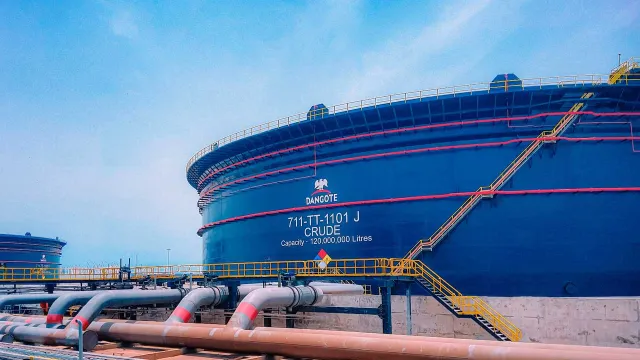
Aliko Dangote plans to expand his oil refinery business in Africa's most populous country by setting up a $14.3 billion second crude distillation plant in Nigeria, effectively increasing processing capacity to 1.4 million barrels per day by 2029.
Nigerian industrialist Aliko Dangote has set in motion Africa's biggest initial public offering seeking to mobilise up to $1.63 billion (about KSh207.168 billion) to finance the expansion of his Nigeria-based refinery as well as his conglomerate's entry into East Africa.
In a market update made in Lagos in Monday, Dangote's offering of 4.1 billion ordinary shares at N525 (about KSh51.28) each started trading on the Nigerian Exchange and will close on 13th October. The deal has capped minimum subscription at 10 shares valued at N5,250 (about KSh512.8).
Related
Kenya edges out Tanzania in race for Dangote’s mega oil refinery
Iran war threatens to wipe out Kenya's Sh164Bn Gulf exports
If fully subscribed, the refinery business is poised to raise about $1.63 billion, a landmark transaction which is set to become the largest offering in the Nigerian stock exchange's history.
Dangote plans to expand his oil refinery business in Africa's most populous country by setting up a $14.3 billion second crude distillation plant in Nigeria, effectively increasing processing capacity to 1.4 million barrels per day by 2029.
What's more, the financing will go a long way in funding the construction of a 700,000 barrels per day in Lamu, Kenya, marking a grand entry of Africa's richest man into East Africa's energy industry.
According to media reports, plans are underway to break ground for the Kenya-based plant on 30th September. Authorities in Nairobi plan to take a 10 percent stake in the Lamu Island refinery, which will be modelled like Dangote's Lagos plant.
The Kenyan refinery, which is expected to cost between $15.5 billion and $16 billion, will be financed through a 30:70 equity-to-debt structure, with Dangote offering governments in the East Africa region a combined 30 percent stake.
President William Ruto's economic adviser Dr. David Ndii said the country could invest about $500 million for its 10 percent shareholding, while Ethiopia and Rwanda have also expressed interest.
“By October this year, we will be groundbreaking. Once we break the ground, we will begin the construction,” Dangote said in August.
Lamu plant is designed to supply Kenya, Uganda, Tanzania, South Sudan, the Democratic Republic of Congo and potentially markets as far as Egypt, reducing the region’s reliance on imported refined products mainly from the Middle East.
Dangote's expansion into the East Africa region has been accelerated by global supply disruptions which have been worsened by the roiling US-Iran conflict and attacks on Middle East refining infrastructure.
Dangote refinery CEO David Bird told Reuters that fuel shortages are likely to persist “long after the US war with Iran” due to damaged refineries and depleted inventories.
“We’re at full capacity, 700,000 barrels per day; we are enjoying those upswings, and yes, it has fundamentally changed the funding premise of this Vision 2030,” Bird said.
Dangote's Nigeria refinery posted a first-half after-tax profit of $1.82 billion for the period ending June 2026, compared with a $476 million loss suffered for the previous full year, according to the prospectus.
Dangote has made an extraordinary prediction for the shares, telling investors the N525 offer price could eventually reach N10,000. “Those small investors who want to buy with N50,000 or N100,000 will get approval first,” he said, adding that dividends could be paid in either naira or dollars.
The company has listed 32 banks, fintechs and mobile operators as approved subscription channels, including Access Bank, Zenith Bank, Flutterwave and MTN MoMo.
Dangote told CNN the refinery would seek a US listing once capacity reaches 1.4 million bpd, a move that would position the company alongside the world’s largest refiners.
“After we have gone to 1.4 million bpd in the next two and a half years, we will now list in the US and I believe a lot of other people too will join, because by that time, we’re going to be the biggest refinery ever in the history of the world,” he said.