Don’t miss a beat: How the pacemaker changed the way we treat the human heart
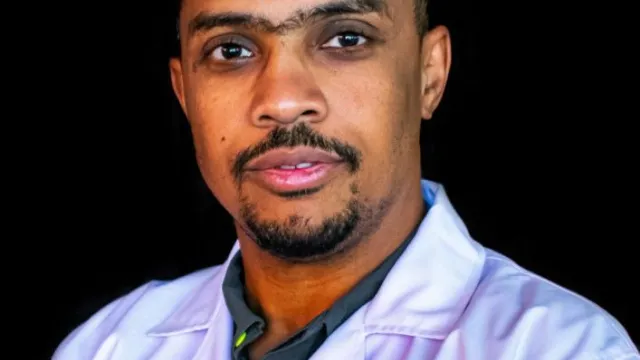
Dr Mohamed Jeilan.
Every healthy heart contains its own pacemaker. It is not a machine. It is a small collection of specialised cells in the heart that generates an electrical signal, usually 60 to 100 times every minute at rest. That signal travels through the heart’s electrical wiring system, telling its upper and lower chambers when to contract.
We rarely think about this remarkable system. The heart simply beats, until it doesn’t.
Related
Agha Khan sets global standards tackling heart attacks

EAC rallies for response blueprint on Bundibugyo strain of Ebola
This year’s World Heart Day carries the message “Don’t Miss a Beat.” It is a call to recognise cardiovascular diseases and act before it is too late. But for some patients, the phrase can be taken quite literally. Their heart is missing beats.
Sometimes the heart’s natural pacemaker becomes too slow. In others, the electrical signal is generated normally but fails to travel from the upper chambers to the lower chambers, a condition known as heart block. The consequences can range from fatigue and breathlessness to dizziness, fainting and, in severe cases, death. For these patients, one of medicine’s most extraordinary inventions can take over: the artificial pacemaker.
At its heart, a pacemaker does something surprisingly straightforward. It watches the heartbeat. If the heart produces an appropriate beat by itself, the pacemaker remains silent. If the heart fails to produce a beat when one is needed, the device delivers a tiny electrical impulse that causes the heart muscle to contract.
Modern pacemakers can do considerably more. They can recognise when a person is exercising and increase the heart rate appropriately. They can coordinate signals between different chambers of the heart. They can store information about the rhythm for doctors to examine later, and many can now be monitored remotely. For the patient, however, their greatest achievement remains the simplest one: when the heart fails to produce the next beat, the pacemaker does.
The first pacemakers would be almost unrecognisable to patients today. In the early 1950s, electrical pacemakers were large external machines. Some contained vacuum tubes, stood on carts and depended on mainly electricity. A patient receiving electrical pacing could therefore be attached, quite literally, to a machine plugged into the wall.
In 1957, American engineer Earl Bakken developed one of the first battery-powered wearable pacemakers. Suddenly, the technology could move with the patient.
Improved technology
Then came the breakthrough that transformed the field.
On 8 October 1958, Swedish surgeon Åke Senning implanted a pacemaker designed by engineer Rune Elmqvist into 43-year-old Arne Larsson. The operation required opening the chest and placing electrodes directly onto the heart. The pacemaker itself was implanted in the abdominal wall. The first device lasted only a few hours.
Yet the experiment ultimately succeeded spectacularly. Larsson lived for another four decades, receiving numerous replacement pacemakers as the technology improved. He eventually died at the age of 86 from an illness unrelated to his heart rhythm. A technology that had begun as an experimental rescue treatment had helped give a desperately ill man decades of life.
The next great advance was finding a less invasive way of connecting the pacemaker to the heart. Instead of opening the chest and sewing electrodes onto the heart’s surface, doctors learned to pass thin insulated wires called leads through veins and into the chambers of the heart. The modern conventional pacemaker gradually took shape.
A small generator containing the battery and electronics is placed beneath the skin, usually below the collarbone. One or more leads travel through a vein into the heart. A single lead can stimulate one chamber. Two leads can coordinate the upper and lower chambers, allowing the pacemaker to reproduce the natural sequence of the heartbeat much more closely.
Meanwhile, batteries became dramatically better. Early pacemakers could require frequent replacement. Modern devices commonly function for many years before the battery needs changing. The machines became smaller, more reliable and vastly more intelligent.
Then doctors then discovered something else. Sometimes the heart does not need to beat faster. It needs to beat together. In some patients with heart failure, electrical signals spread abnormally through the heart. Different parts of the main pumping chamber therefore contract at slightly different times.
Imagine ten people trying to push a stalled car. Ten people pushing together can move it. Ten people pushing at different moments waste much of their combined effort. The failing heart can behave in much the same way.
This led to cardiac resynchronisation therapy, or CRT. A specialised pacemaker that sends carefully timed electrical impulses to different areas of the heart so that the ventricles contract in a more coordinated fashion. For appropriately selected patients with heart failure, this can improve the efficiency of the heart, reduce symptoms such as breathlessness, reduce hospital admissions and, in suitable patients, improve survival. The pacemaker had evolved from simply preventing dangerously slow heartbeats to helping a weakened heart pump more effectively.
For decades, one fundamental feature of the pacemaker hardly changed. There was a box under the skin and a wire connecting that box to the heart.
The wire is remarkably reliable, but it can also be the source of problems. Leads can occasionally fracture, become infected or contribute to obstruction of the veins through which they pass. The pocket beneath the skin can also become infected.
Engineers therefore asked an audacious question: What if we removed the box and the wire altogether? The result was the leadless pacemaker.
Instead of making an incision in the upper chest and passing a wire down into the heart, a miniature self-contained pacemaker can be delivered through a vein in the leg using a catheter. The entire pacemaker - battery, computer, sensing system and electrode - sits inside the heart.
There is no pacemaker lump beneath the skin of the chest. There is no surgical pocket. And there is no long lead travelling from the shoulder into the heart.
Leadless pacemaker
Earlier this year, specialists at the Aga Khan University Hospital, Nairobi, implanted the country’s first leadless pacemaker, marking another step in the gradual expansion of advanced cardiac technologies available to patients locally.
Early leadless pacemakers were mainly capable of pacing a single chamber of the heart. The technology has since advanced. Some leadless systems can coordinate the timing of the upper and lower chambers, bringing more sophisticated pacing to patients without the traditional chest generator and leads.
The contrast with 1958 is extraordinary. The first implanted pacemaker required opening the chest, placing wires directly onto the heart and implanting a relatively large device in the abdominal wall. Today, a pacemaker small enough to sit entirely inside the heart can be delivered through a vein in the leg.
Perhaps pacemakers receive less public attention than they deserve because their work is so quiet.
A successful pacemaker does not announce itself. It simply allows somebody who was fainting to stop fainting. It allows someone whose pulse was dangerously slow to walk normally again. It allows a grandparent to climb the stairs or play with the grandchildren without the exhaustion caused by a heart beating at 30 times a minute.
A pacemaker does not cure every form of heart disease, and not every slow pulse requires one. Careful assessment is essential. But when the electrical system of the heart has genuinely failed, medicines frequently cannot provide a reliable substitute for pacing. The solution is electrical.
More than seven decades of engineering have transformed that solution from a machine connected to the wall, to a wearable box, to a surgically implanted device, to the sophisticated pacemakers beneath the skin and finally to devices small enough to disappear completely inside the heart. The technology will continue to evolve. But its purpose remains remarkably close to that of the pioneers of the 1950s.
Listen to the heart. Wait. And when the next beat fails to arrive, provide it.
This World Heart Day, “Don’t Miss a Beat” is an important reminder to recognise heart disease early. For millions of people who have benefited from pacemaker technology, it also describes something much more literal. Not missing the next beat is precisely what keeps us alive.
The author, Dr Mohamed Jeilan, is the Director, Cardiac Services and Consultant Interventional Cardiologist at Aga Khan University Hospital Nairobi.