EACC secures Sh207M forfeiture in unexplained wealth from ex-county staff

Lady Justice Rose Ougo ruled that Andrew Biketi Musuya, a former accountant at both the Ministry of Public Health and Sanitation and the County Government of Trans Nzoia, had failed to satisfactorily explain the source of his vast estate.
Andrew Biketi, a former accountant at Trans Nzoia County, has been forced to surrender unexplained assets including houses, cash, plots, and vehicles worth KES 207.7 million to the Ethics and Anti-Corruption Commission (EACC).
In a ruling delivered on October 8 at the Anti-Corruption and Economic Crimes Court in Nairobi, the surrender signals growing pressure on state officials to account for wealth that is disproportionate to their earnings.
Related
Man blames corruption for default on HF loan

Waititu failed to safeguard public funds — Court
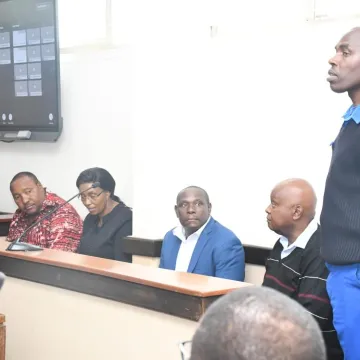
Lady Justice Rose Ougo ruled that Andrew Biketi Musuya, a former accountant at both the Ministry of Public Health and Sanitation and the County Government of Trans Nzoia, had failed to satisfactorily explain the source of his vast estate.
In her judgment, Justice Ougo ordered the assets transferred to the Government of Kenya with the bulk of the seized wealth, valued at KES 150.2 million, comprising prime real estate. This includes two five-storey apartment blocks and a five-bedroom townhouse in Mtawapa, Mombasa County, alongside seven undeveloped land parcels spread across Mombasa and Bungoma.
Additionally, the court ordered the forfeiture of cumulative bank and mobile-money (M-Pesa) deposits amounting to KES 53.5 million, as well as two motor vehicles valued at KEs 4 million.
The ruling followed a forensic investigation by the EACC covering a five-year period between January 1, 2013, and October 31, 2018. During this window, the Commission established that Mr. Musuya had accumulated assets with a total value of KES 289.9 million shillings.
This figure included not only the seized deposits and properties but also vehicles worth 9.6 million shillings.
Crucially, the EACC instituted proceedings under Section 55 of the Anti-Corruption and Economic Crimes Act (ACECA), which shifts the burden of proof onto the accused in cases of unexplained wealth. The Commission sought to recover KES 284 million, arguing that the assets were acquired through corrupt conduct.
Justice Ougo concurred with the prosecution's assessment that the disparity between Mr. Musuya’s known legitimate income and his accumulation of wealth was too vast to be accidental.
The court found that he had failed to provide a credible explanation for 207.7 million shillings of the total sum, paving the way for the state to seize the assets.