E-bike maker Spiro eyes expansion with Sh6.45Bn Afreximbank funding
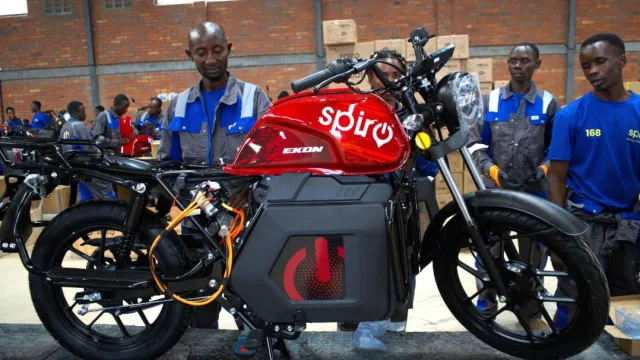
Founded in 2022, Spiro controls over 50 per cent of Africa’s electric motorcycle market, operating across markets in Kenya, Uganda, Rwanda, Nigeria, Benin and Togo.
Electric motorbike maker Spiro has secured KES6.45 billion ($50 million) fresh funding to enhance its green mobility investment, including its battery-swapping business model, across key African markets.
The funding, which was secured from the African Export-Import Bank (Afreximbank) alongside new investors Nithio and Africa Go Green Fund, managed by Cygnum Capital, is set to build on Spiro’s $100 million financing deal that was sealed in October last year.
Related
Rall_E ignites Kenya's electric mobility revolution

Bolt hits 500 e-bikes, paving the way for Kenya's green future

“We are creating a resilient, green energy ecosystem that supports economic development and climate goals. This funding empowers us to bring affordable clean energy and mobility to millions of Africans while deploying an industry leading energy infrastructure that will contribute meaningfully to a greener future in Africa,” said Gagan Gupta, Founder of Spiro.
Founded in 2022, Spiro claims it controls over half of Africa’s electric motorcycle market, operating across markets in Kenya, Uganda, Rwanda, Nigeria, Benin and Togo.
According to Spiro, the firm has deployed over 80,000 electric motorcycles, circulated more than 300,000 batteries, and established over 2,500 battery-swapping stations across its markets.
Additionally, Spiro-affiliated riders have completed over 30 million battery swaps, collectively covering over one billion carbon-free kilometres, giving the firm one of the largest installed electric two-wheeler networks on the continent.
The company’s expansion comes as electric mobility gathers momentum across Africa, driven by rising fuel costs, urban transport demand and growing climate financing. Statistics show that green mobility startups across Africa continue to attract critical funding, further underlining the capital-intensive nature of the growing sector that is characterized by battery deployment and sustained financing to maintain operational reliability.
“Demand for Spiro’s innovative, industry-leading battery swapping infrastructure continues to grow and is reshaping mobility in Africa by providing reliable, clean transportation options across the continent. With strong financial backing and cutting-edge technology, Spiro is leading Africa's transition to sustainable mobility. This new funding reinforces our vision of building a robust, scalable energy network tailored for Africa by Africans,” said Kaushik Burman, CEO of Spiro.
Africa’s electric two-wheeler market is now transitioning from pilot programmes to large-scale commercial rollouts.
Data shows that Kenya, which is East Africa’s largest economy, has more than 1.9 million registered motorcycles with a majority operating as boda bodas, creating a vast daily-use ecosystem that aligns well with electric mobility.
According to the Managing Director of Africa Go Green Fund, Laurène Aigrain, Spiro’s latest financing agreement reflects growing confidence in scalable clean mobility solutions.
“Spiro has built a strong platform that is delivering tangible impact across multiple African markets; we are pleased to support the next phase of its growth as it scales critical clean mobility infrastructure. This transaction reflects our commitment to backing commercially robust businesses that combine innovation with measurable environmental and social impact,” she remarked.
Under Spiro’s model, riders purchase or lease electric motorcycles while depleted batteries are exchanged for fully charged units at swapping stations with the company retaining ownership and management of the batteries.
“Spiro is one of the largest and fastest-growing players in the pan-African e-mobility market,” said Raghav Sachdeva, CIO of Nithio.
“They have demonstrated that electric mobility can scale rapidly while delivering real economic value to riders and meaningful emissions reductions. We are proud to support Spiro’s continued growth and see e-mobility as a critical pillar of Africa’s clean energy transition,” he explained.