Push on to seal governance gaps in family businesses amid succession crisis
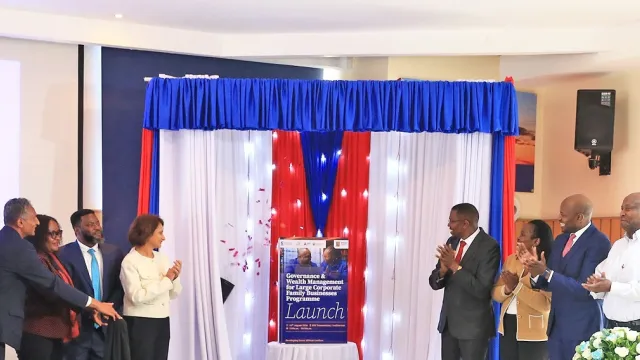
Strathmore Business School, Standard Chartered, ALN and the Association of Family Business Enterprises have come together to launch a new executive programme focused on a challenge many family businesses across Africa are facing - succession and how to ensure businesses and wealth are successfully passed on to the next generation.
Family-owned businesses in Africa, which form the core of the continent's private sector, are confronting a generational crisis as ageing founders and weak governance structures threaten long-term continuity.
To counter the emerging risk for family-owned entities in the region, four institutions in Kenya have struck an alliance, launching an executive training aimed at strengthening succession readiness and wealth preservation.
Related
Cultivating Adaptive Leadership: Harnessing Executive Coaching for Success

In an update on Tuesday, Strathmore Business School, Standard Chartered, ALN and the Association of Family Business Enterprises unveiled a partnership poised to deliver a custom training targeting founders, next-generation leaders, family office representatives, board members and senior executives across the continent.
The training is set to be rolled out in three modules running from September to November 2026 in Nairobi.
Statistics shared by the Family Business Institute show that only 30 to 40 percent of family-owned enterprises transition to the second generation, with only 12 to 13 percent reaching the third generation. Sadly, only a mere 3 percent of family owned businesses survive beyond the fourth generation.
A PwC Africa Family Business Survey 2025 found that while 66 percent of African family businesses reported sales growth, governance remains a critical pressure point.
The PwC survey noted that only 77 percent of family businesses in Africa have formal structures and just 21 percent have dispute-resolution procedures in place.
The continent holds an estimated $2.5 trillion in investable wealth and more than 122,000 dollar millionaires, with millionaire numbers projected to grow 65 percent over the next decade.
In Kenya alone, 6,800 to 7,200 dollar millionaires hold about $90 billion in assets, while more than US$80 trillion is expected to pass between generations globally.
These figures underscore the scale of what is at stake as family enterprises expand across sectors, jurisdictions, and generations, often without the institutional frameworks needed to manage complexity and transition risk.
Informal decision-making, limited board independence, undocumented succession plans, and weak next-generation preparation heighten the fragility of these businesses at precisely the moment when professionalisation becomes critical.
The programme will see Strathmore Business School provide academic and executive education leadership even as Standard Chartered contributes wealth management and financial stewardship expertise.
At the same time, ALN will be offering legal perspectives on governance, succession, and estate planning while AFBE will share practical insights from supporting family businesses across the region.
"Family businesses are central to Africa's enterprise and wealth creation story," said Edith Chumba, Head of Wealth & Retail Banking, Kenya and East Africa at Standard Chartered. "As more founders prepare for generational transition, strong governance, succession planning and wealth continuity are becoming business-critical."
Dr. Vincent Ogutu, Vice Chancellor of Strathmore University, framed the initiative within the broader context of Africa's economic development. "Family businesses have played a pivotal role in driving economic growth across Africa," he said. "Their continued success depends not only on entrepreneurial vision, but also on strong governance, responsible leadership and effective succession planning."
The executive programme will deliver three modules covering governance, succession, wealth preservation, legal and tax considerations, conflict resolution, and business continuity. Three post-programme mentoring sessions will support implementation, ensuring participants translate learning into actionable roadmaps.
Participants are poised to benefit from practical governance, succession and wealth management frameworks to strengthen business resilience, alongside a peer network of family business leaders across Africa.