Kenya's food deficit is a big opportunity but funding flaws lock out investors
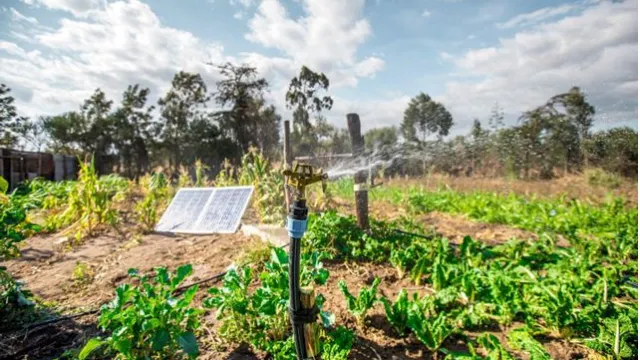
Agribusiness ventures always look very profitable on paper, but their execution is often marked by profit-sapping challenges such as energy costs, pests and diseases.
A persistent annual food supply gap for basic items including eggs, milk, fish and honey presents a billion-dollar investment opportunity yet a mismatch in financing continues to lock out potential investors from the country's agribusiness.
According to a new analysis, Kenya grapples with an annual supply gap of roughly five billion eggs, 7.5 billion metric tonnes of milk, 340,000 metric tonnes of fish and 5,500 metric tonnes of honey, a deficit that offers lucrative entry points for thousands of youth seeking income generating opportunities.
Related
AGRA's new plan to improve Kenya's food security, farmer incomes

Fresh breeding style in goats billed to significantly boost global food security
Yet, the Green Finance for Youth Employment: A Food Systems Analysis of 14 Counties in Kenya report by FSD Kenya, IFAD and the National Treasury notes that the country's agribusiness funding systems is "unsuitable" and must shift in order to tap into this food supply opportunity that is currently served by importers.
The survey highlights that current credit system in the banking industry is primarily designed for salaried workers, not investors banking on cash flows from viable poultry, dairy or horticulture ventures.
According to the report, which surveyed over 1,200 agri-based ventures in 14 counties in the country established that agribusiness ventures always look very profitable on paper, but their execution is often marked by profit-sapping challenges such as energy costs, pests and diseases.
For instance, on paper, a venture into chicken farming is forecast earn 108 percent return on investment, pond fish farming offers 127 percent in earnings while fish trade gives 257 percent ROI. An apiary startup of say 20 hives is projected to record 159,900 per season.
However, the survey shows that over half (51 percent) of poultry keepers, and the bulk of fish mongers grapple with funding challenges, not because their ventures fail, but due to demands such as land titles for collateral in banks.
What's more, the lenders demand formal registration of their enterprises over and above tying the borrowers to monthly loan repayments schedules which are out of sync with earnings from their businesses.
“The key challenge is, therefore, not lack of capital, but misalignment between financial product design and the realities of youth-led agri-food and green enterprises,” the report states in part.
Entry tips into agribusiness
For millions of youth and potential investors planning to take a leap of faith in agribusiness, the report has identified some bankable entry points to navigate the terrain.
In poultry for instance, swapping conventional feed with Black Soldier Fly protein and opting for solar systems instead of mains electricity supply could see one cut monthly costs by 42 percent to about KSh15,000 and push up the ROI to 260 percent from 108 percent. Report shows that the additional expense for acquiring solar heaters and solar miling unit can pay back in a single production cycle.
In aquaculture, by substituting conventional feeds with BSF protein reduces feed costs, which account for 52 to 57 percent of total bill, by 40 per cent. A typical pond operation harvesting 1,000 kg per seven-month cycle generates gross revenue of KSh200,000. With BSF feed substitution, the net profit could rise to KSh132,000 from KShs 112,000 and ROI jumps from 127 percent to 194 percent.
In dairy farming, the survey shows that 38 percent of enterprises can use solar-powered coolers and processors yet over 80 percent of cooperative coolers run on grid currently.
Bee keeping venture can also benefit a lot from an alignment shif in financing. For instance, modern Langstroth hives show 73 percent adoption, and they are delivering up to 10kg per hive per season compared to 4-6 kg under traditional methods.
But hives and equipment represent 71 percent of total costs. A 20-hive operation generates KSh159,900 net profit per season, yet standard loan terms fail because they lack grace periods and biannual repayment schedules that match honey harvesting cycles.
Shift in funding models
FSD's report calls for a redesign on the financing products of agribusinesses to align with the production cycles and not ordinary calendar months which is typical for salaried workers.
For aquaculture, lenders have been challenged to provide grace periods of between seven and 12 months, the length of a fish production cycle, with the repayment aligned to harvest. For apiculture, the report recommends biannual repayment schedules while for poultry, borrowers should get between six to 12 months. For horticulture, seasonal input loans with 30-to-90-day terms may be the most appropriate.
“Fixed monthly repayment structures are unsuitable for enterprises such as aquaculture, apiculture, and poultry that generate income after relatively long production periods,” the report states. “As a result, many viable enterprises experience repayment distress despite being commercially profitable.”
The report also calls for alternative credit assessment models that use mobile money transaction histories, cooperative delivery records and digital platform data instead of land titles. Currently, 53 percent of agri-enterprises cite lack of collateral as their primary barrier. Forty-three per cent cite irregular income. Sixteen per cent cite weak financial records.
Additionally, the report recommends asset-backed leasing models where the financed equipment itself serves as collateral. Solar incubators (KSh67,500), solar freezers (KSh87,500), PVC fish cages (KSh280,000) and Langstroth hive kits all have verifiable market values and income-generating lifespans that outlast their repayment periods.
The study also identifies structured offtake agreements, featuring formal supply contracts with processors, supermarkets, hotels and exporters, as collateral substitutes.