Counties, alcohol distillers fault new bill citing job cuts, revenue losses

A coalition of alcohol manufacturers in Kenya have warned that a new bill seeking to regulate the industry "could threaten thousands of jobs, reduce government revenue, undermine legitimate businesses and drive consumers towards unsafe illicit alcohol."
A proposed overhaul of Kenya's alcohol control laws is facing opposition from drinks manufacturers and county licensing authorities, with critics warning that the legislation threatens thousands of jobs, billions of shillings in tax revenue and the constitutional settlement on devolution.
The Alcoholic Drinks and Drugs Control Laws (Amendment) Bill, 2026, introduced in the National Assembly in its First Reading on Thursday, has drawn a demand for withdrawal from the Alcoholic Beverages Association of Kenya (ABAK), which represents leading manufacturers including Kenya Breweries, Heineken, Kenya Wine Agencies and Pernod Ricard Kenya.
Related
Are Kenyan women drinking more alcohol than men?
Blue economy, alcohol and other sectors where Kenya is seeking investors

Separately, the caucus of Liquor Licensing and Control Boards of Kenya, the umbrella body for county liquor boards in all 47 counties, accused Parliament of attempting "to amend the Constitution through the back door" and of seeking to "undermine county governments' constitutional mandate and centralize a devolved function."
The twin interventions raise the prospect of a protracted legislative battle over a bill that its backers present as a public-health measure but which industry argues would disproportionately burden legitimate operators while allowing illicit traders to thrive.
Reduced revenue
ABAK warned that the bill "could threaten thousands of jobs, reduce government revenue, undermine legitimate businesses and drive consumers towards unsafe illicit alcohol."
Preliminary industry modelling cited by the association estimates that raising the minimum drinking age from 18 to 21 would put at risk approximately KES 3.3 billion in annual retail and hospitality revenues, KES 1.8 billion in government tax revenue, 8,960 jobs and 1,792 licensed outlets.
The bill also proposes a KES 2 per litre "solatium levy" for legitimate manufacturers, which ABAK says would impose an additional KES 1.3 billion annual burden and "significantly increase the price gap between regulated products and cheaper illicit alternatives."
It introduces duplicate national licensing and product registration requirements, restricts alcohol transportation to between 6.00a.m. and 6.00p.m., and creates a new committee to approve advertising and promotions.
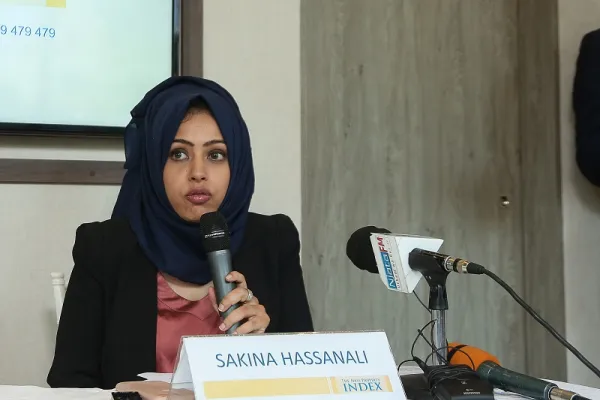
"Coming at a time when our industry is under significant pressure from illicit alcohol providers, this Bill risks weakening legitimate businesses while creating more room for illicit alcohol to flourish," said Kui Kinyanjui, chair of ABAK.
"This will affect thousands of jobs, affect planned investments, reduce government revenue and ultimately expose consumers to greater harm."
The association pointed to a 2025 Euromonitor International study finding that illicit alcohol has grown to approximately 60 per cent of Kenya's total alcohol market by litres of alcohol equivalent, with illicit volumes up 27 percent since 2022 and growing faster than the legal market.
It argued that restricting access for an estimated three million Kenyans aged 18 to 21 could "inadvertently spur the growth of unregulated and informal channels."
ABAK said it supports effective measures to prevent alcohol-related harm and combat illicit trade, and noted "the commendable joint action plan against illicit alcohol" being implemented by the National Steering Committee on Combating Illicit Alcohol and Drugs, chaired by Deputy President Kithure Kindiki.
But it insisted that "regulation must be proportionate, evidence-based and developed through meaningful consultation."
The counties' objection is constitutional rather than commercial. The caucus argued that Part 2, Paragraph 4(c) of the Fourth Schedule expressly assigns liquor licensing to county governments, a function it said "cannot be reclaimed or transferred through ordinary legislation." It cited Articles 186 and 189 on the distribution of functions and Articles 109, 110 and 111, including the Senate's role in protecting county interests.
"We consider this an affront to the Constitution of Kenya, 2010, and a direct assault on the principles of devolution," the caucus said, adding that counties "cannot be reduced to spectators in matters falling squarely within their constitutional mandate."
The caucus said it supports "stronger national coordination in combating illicit alcohol and alcohol abuse," but insisted "these objectives cannot justify violation of constitutional distribution of functions." It called for withdrawal of the bill and "meaningful consultation with the Senate, Council of Governors and all the County Liquor Licensing Boards."
The dispute underscores a broader tension in Kenya's regulatory approach to a sector that generates substantial excise revenue but sits at the intersection of public health, devolved governance and a large informal market. Both critics converge on a procedural complaint: that the bill was developed without adequate consultation.
Regulatory uncertainty
ABAK called for "a transparent consultation process involving county governments, regulators, public-health stakeholders and the entire alcohol value chain," while the caucus demanded engagement with the Senate and the Council of Governors.
For investors in Kenya's licensed beverage sector, the bill adds a layer of regulatory uncertainty at a time when legitimate operators are already ceding market share to illicit producers.
ABAK warned that the proposed restrictions on supermarket, restaurant and online sales would "impact Kenya's tourism and growing e-commerce sector," while the transport curfew "would disrupt legitimate supply chains, increase logistics costs and raise conflicts with Kenya's ambition to build a 24-hour economy."
"Balanced regulation should protect consumers, support legitimate enterprise, preserve jobs and safeguard public revenue," ABAK said.
The bill now returns to the National Assembly, where its future depends on whether Parliament accommodates the counties' constitutional objections and the industry's economic concerns or presses ahead, inviting both a legal challenge and a sustained lobbying campaign.