New Cameras to Monitor Every Move on Major Roads
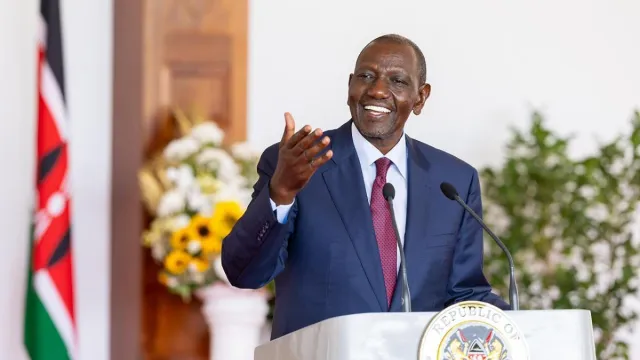
President William Ruto
Officials at the Ministry of Transport have a month to install cameras on vital roads across Kenya’s key cities and towns as part of a bold plan to help tackle rising cases of traffic accidents.
The plan, which was announced on Monday by President William Ruto during a meeting of the National Council on the Administration of Justice comes amid concerns over slow implementation of instant fines framework targeting traffic offenders.
Related
CFAO Mobility Kenya drives road safety through art in schools
During the forum, President Ruto called out Transport Cabinet Secretary Davis Chirchir and the National Transport and Safety Authority (NTSA) Director-General Nashon Kondiwa, citing slow progress in installing cameras even as road accidents claimed 5,009 people in 2025, up from 4,448 deaths a year earlier.
The President highlighted that during the festive season, road fatalities increased to 415, reflecting a 23 percent increase from a similar period in 2024. Road fatalities cost the economy an estimated KES450 billion every year.
“We have taken forever. The Ministry of Transport, why don’t we enforce the instant fines programme? Why haven’t we rolled out the cameras on our roads? Rolling out cameras is not rocket science. Let us roll out the cameras in the five or six major towns within one month,” Dr. Ruto directed, adding that these gadgets should be integrated into the instant fines framework.
President Ruto also delved into the matter of corruption within the traffic department in the National Police Service, noting that bribery and inefficiency continues to undermine public confidence in the law enforcement unit.
To help fight corruption in the unit, Dr. Ruto ordered a reduction in traffic officers deployed roads, saying smart cameras would handle enforcement alongside the judiciary.
The 2025 Ethics and Anti-Graft Commission systems audit shows that out of roughly 104,000 National Police Service officers, bout 1,000 traffic officers are on active duty manning roads.
The audit also exposed a structured bribery system, with estimates showing that an officer could collect KES20,000 in two hours, amounting to approximately KES3 billion in collections every month across the country.
The President underscored that the cameras are not only vital for law enforcement but also a welcome boost to revenue collection efforts.
Citing a coordinated inter-agency traffic justice model undertaken during the 2025/2026 festive season, the deployment of 36 prosecutors, 40 EACC officers, and 121 NTSA officers helped to lower cases of fatalities involving public service vehicles by 10 percent.
However, Dr. Ruto warned that accidents involving private vehicles, night-time crashes, and boda boda incidents remain serious threats to the safety of road users.
He cited reckless and drink driving, poor driver training, unlicensed riding, use of unroadworthy vehicles, counterfeit spare parts, unsafe road design, lenient penalties, weak enforcement, and corruption as some of the manor contributing factors to rising cases of accidents.
To address these, the President outlined key reforms, including amending the Traffic Act to introduce instant fines to offenders. What’s more, the use of a demerit system, standardising driver training and scaling up automated ticketing could help reduce accidents, the President said.
The reforms will also see the deployment of CCTV and speed cameras on key roads in towns and cities and the establishment of an integrated e-transport and traffic case management system.
Traffic officers will also be expected to dress on body-worn cameras even as the agencies work on formalising operations of the ubiquitous boda boda sector with a view to check rising cases of accidents.
Additionally, the government plans to expand trauma centres and ambulance points along highways while deploying tachographs to monitor driver fatigue, the president explained.
While backing the reforms, Chief Justice Martha Koome noted that over 62,000 traffic offences were filed in courts during the 2024/2025 financial year, including 787 cases linked to fatalities.
She highlighted the strain this places on the judiciary and counseled that minor offences could be handled administratively to improve efficiency.
Koome also highlighted the financial burden that road accidents place on the health system, estimating KES48.5 billion annually in emergency services, hospitalisation, surgery, rehabilitation and long-term care.
At the moment, the average treatment cost for for moderate injuries stands at KES69,000 while severe cases requiring hospital stays of 10 to 24 days part with roughly KES147,000.
“The role of the justice sector in prevention, investigation, arrest, adjudication and enforcement is central to achieving this objective. We particularly focus on prevention,” Koome said.
Dr. Ruto called for a whole-of-government approach, supported by dedicated financing mechanisms such as the National Road Safety Fund, to implement the pilot’s recommendations and help reduce fatalities.