Iran to Kenya: You're Not Our Target
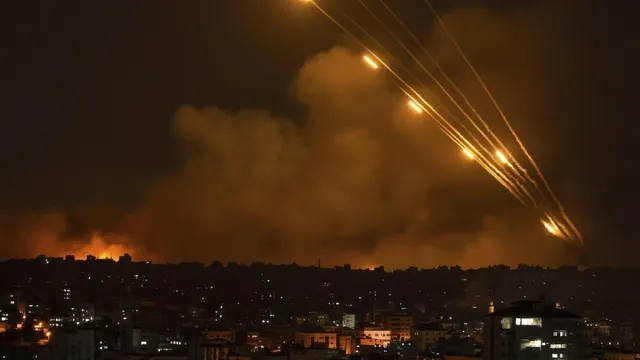
Iran's revenge attacks on military sites and shipping in the Middle East countries including Qatar, the United Arab Emirates, Saudi Arabia, Bahrain, Iraq and Oman have heightened fears of a wider global conflict.
Iran has no plan to target Kenya or U.S. installations in the East African country even as Tehran intensifies revenge missile attacks following Saturday's invasion of the Middle Eastern nation by the U.S. and Israel.
In an update on Monday in Nairobi, Iranian Ambassador to Kenya Ali Gholampour allayed growing fears among Kenyans that U.S. installations in the country could be a target even as the U.S.-Israel-Iran conflict entered its third day.
Related
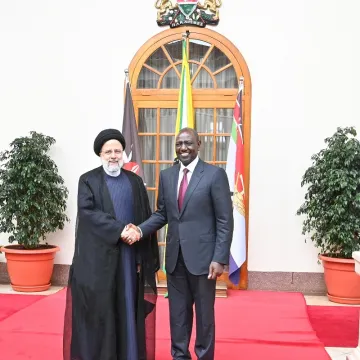
Kenya and Iran forge partnership, sign over 22 MoUs
Ali's communique follows a travel advisory issued by the Ministry of Foreign and Diaspora Affairs on Saturday, urging Kenyans living in the Middle East to remain vigilant, limit movement, register with the embassies, and follow host governments’ security instructions.
The envoy said Kenya does not host a U.S. military facility capable of attacking Iran and noted that Iran’s short-range missiles cannot reach Kenyan territory.
“Our missiles will not reach the Kenyan territory. Our government has deliberately, in order to show its peaceful intentions, limited the range of missiles only for defensive purposes,” he said.
“Iran will not target Kenya… Kenya doesn’t provide a U.S. military facility with a magnitude to attack Iran,” he added.
While the U.S. maintains a military presence in Kenya, including at Camp Simba in Lamu County, the site is focused on regional security and counterterrorism, particularly operations against extremist groups like Al-Shabaab.
Ali however acknowledged that Kenya and other African countries could still be affected indirectly, citing potential disruptions to trade routes and commercial transport corridors.
The escalating conflict that saw Iran's Supreme Leader Ayatollah Khamenei assassinated on Saturday stem from longstanding disputes over Tehran's nuclear program, which authorities in Washington and Israel suspect is aimed at developing weapons.
Iran has maintained that its nuclear enrichment plan is meant for peaceful purposes.
At the moment, Iran's revenge attack on military sites and shipping in the Middle East countries including Qatar, the United Arab Emirates, Saudi Arabia, Bahrain, Iraq and Oman have heightened fears of a wider conflict.
Gulf countries have been particularly affected due to their proximity and economic ties, raising concern among the estimated 400,000 Kenyans living in the Middle East, including more than 310,000 in Saudi Arabia, 66,000 in Qatar and between 23,000 and 40,000 in the UAE could suffer.
The Iran ambassador urged the United Nations and other international organisations to take the lead in negotiations and uphold international law to secure a ceasefire.
“We did not seek this war; this is a patriotic war that has been imposed on us, and now that it has been imposed, the world will witness what Iran is capable of when its dignity, sovereignty, and leaders are attacked,” he said.
On Monday, President William Ruto condemned the strikes on Iran and called for de-escalation. Kenya also condemned the ongoing attacks on UAE, Qatar, Saudi Arabia, Iraq, Oman, Kuwait, Jordan, and Bahrain, warning that regionalisation of the conflict poses a grave threat to international peace and security.
“It is evident that the regionalisation of this conflict poses a grave threat to international peace and security. At this defining and perilous moment in global history, longstanding multilateral institutions remain indispensable frameworks for the resolution of the current crisis in the Middle East,” said the President.
Kenya and Iran enjoy a strategic trade ties with the FY2024/2025 statistics showing that Nairobi exported approximately KES6.8 billion worth of goods especially tea to Tehran while imports from the Gulf nation eased to KES2.45 billion.