Nairobi counts the cost as PSV paralysis hits economy
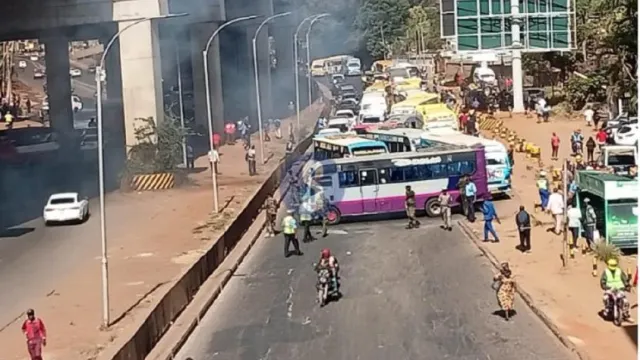
As a matatu strike unfolds in Nairobi, the impact is set to significantly disrupt the productivity of millions of commuters in a city where 70 percent of the people depend on PSVs for transport every day.
Nairobi was plunged into an economic paralysis on Monday as a strike by public service vehicle operators brought the city's transport system to a screeching halt.
The transport paralysis was triggered by increasing incidences of lawlessness across the city whereby bodaboda riders attack and burn down public vehicles following accidents, leaving the owners to pick up the losses.
Related
Race for green PSV buses gathers pace as KCB, BasiGo Kenya strike financing deal

As the crisis unfolds, the impact is set to significantly disrupt the productivity of millions of commuters in a city where 70 percent of the people depend on PSVs for transport every day.
With the key arteries of East Africa's largest city, including Thika Road, Waiyaki Way, Outer Ring Road, experiencing limited access, the chaos is likely to cause widespread economic loss as productivity grinds to a standstill across the metropolis.
Official statistics show that at least 150,000 bodaboda operators earn their living as riders across the metropolis, competing for customers directly with matatus albeit for short travel demands. Quite often, the boda boda subsector has been blamed for harbouring criminals, a claim which they deny.
Across Nairobi CBD on Monday morning, long queues were seen across various bus stations that often facilitate the movement of workers to various work sites around the city such as Uppper Hill, Community and Westlands.
According to a statement released on Sunday, matatu operators blamed the government for failing to reign in on rising 'gang culture' perpetrated by boda boda operators, which has also left private car owners attacked and their vehicles burnt down in the event of accidents with riders.
Statistics show that up to six public service vehicles including a 65 seater bus, matatus (3), and two 33 seater minibuses have been burned down in Kenya since September last year.
The latest incidence happened on Juja Road on January 23 when a matatu was torched after allegedly hitting and killing a pedestrian.
Media reports show that the matatu driver attempted to run away from the scene but was cornered by angry bodaboda mobs, beaten and his matatu set on fire.
"A gang of bodaboda riders pursued and set on fire a matatu after it allegedly ran over one of them in an accident along Juja Rd in Nairobi. The rider who was moving in the opposite direction is said to have been hit by another rider before he landed on the road where the matatu was," The Star reported.
The ongoing transport crisis is a huge set back to the city economy where roughly 70 percent of commuters rely on public transport systems to go to work or receive services across the capital on a daily basis.
At peak level, especially during morning and evening hours, nearly 100,000 commuters rely on public transport every hour, requiring up to 2,400 buses to facilitate smooth travel.
While matatus remain the dominant means, an estimated one percent of commuters or 14,000 people use railway transport to travel in the city.