Consumers hit as selling prices rise sharpest in June on fuel costs

At least four in every 10 companies surveyed in June across Kenya said they experienced significant jump in input costs largely attributable to rise in the cost of fuel.
Many businesses across Kenya increased their selling prices at the fastest pace in June owing to sharp rise in pump prices and the cost of raw materials, further squeezing consumers who are grappling with high cost of living.
June data according to the Stanbic Bank Kenya Purchasing Managers Index (PMI) shows the rise in selling prices came amid interventions by the government to stabilise oil prices. Kenya's PMI increased to the neutral 50.0 mark during the month under focus from 46.6 recorded in May.
Related
Kenya's private sector contracts as war in the Middle East hits demand, input costs
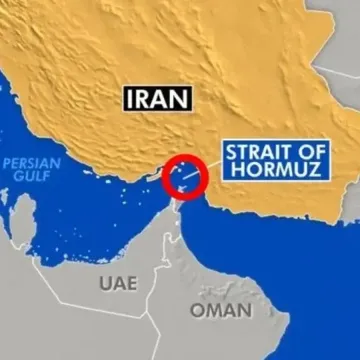
CBK holds key lending rate at 8.75% as Iran war threatens oil shock

While Kenya's PMI increase in June ended a three-month stretch in contraction, consumers continue to bear the heaviest burden. At least four in every 10 companies surveyed said they experienced significant jump in input costs, pushing up the rate of overall cost inflation to the highest point since November 2023.
Fuel levies drive cost surge
Companies surveyed said the uptick in the cost of operations was primarily attributable to high fuel prices, a negative impact that continues to course throughout the economy.
Other than high energy bills, companies reported high prices of food items, paper, IT equipment and accessories as well as the cost of construction materials.
The sharp acceleration in input costs, which has been building through the second quarter, culminated in a record mark-up in average prices charged at Kenyan firms in June.
This pass-through to consumers signals that the current price shock may persist longer than the 2022 oil-price episode, according to Christopher Legilisho, Economist at Standard Bank.
"Most concerningly, input and output prices accelerated sharply, reflecting higher fuel and raw material costs and a stronger pass-through to consumers," Legilisho said. "This has been keeping margin pressure elevated; further, it implies that the current price shock may last longer than the 2022 oil-price episode."
Supply chain constraints deepen
However, some positive signals were also reported by players in Kenya's private sector business during the month. For insance, fresh orders increased for the first time since February.
Companies noted that the rise in new orders was largely attributable to customer referrals, ongoing marketing campaigns besides other initiatives powering growth of their firms.
However, the mismatch between rising orders and falling output created significant operational challenges.
Business activity contracted for the fourth consecutive month, with many panellists citing weak client numbers, supplier capacity cuts and reluctance among customers to purchase inputs amid rising cost burdens and limited cash flow.
The supply-side constraints were particularly acute in June, with data signalling the greatest lengthening of overall supplier delivery times since April 2020.
Vendors were reportedly reluctant to deliver goods until transport capacity was full, driven by product shortages and elevated fuel costs. This contributed to a solid increase in unfinished business across the private sector.
Cautious optimism
Despite the challenging environment, Kenyan firms demonstrated resilience by increasing employment levels following a slight decrease in May. Stock levels also rose slightly as some companies built inventories amid strengthening confidence and concerns about potential shortages.
Output expectations improved for the second consecutive month, reaching their highest level since February 2023. Anecdotal evidence showed that firms broadly looked beyond current inflation concerns, buoyed by planned business developments, new market entries, greater marketing efforts and innovation.
Legilisho noted that firms are more confident about future output expectations due to advertising, the entrenchment of technology and expectations of lower fuel costs.
"The deterioration in backlogs and supplier delivery times suggests that supply-side constraints are limiting firms' ability to convert stronger orders into output," he said. "Inventories increased in June due to concerns about shortages but also due to higher expectations of growth."
International oil prices offer hope
While the domestic price picture remains challenging, there may be some relief on the horizon. International oil prices have been declining, which could provide reprieve for firms in time, Legilisho suggested.
The PMI data, compiled by S&P Global from responses to questionnaires sent to purchasing managers in a panel of around 400 private sector companies, provides a snapshot of business conditions across agriculture, mining, manufacturing, construction, wholesale, retail and services sectors.