AGOA: Kenya gains fresh duty-free U.S. entry until 2028
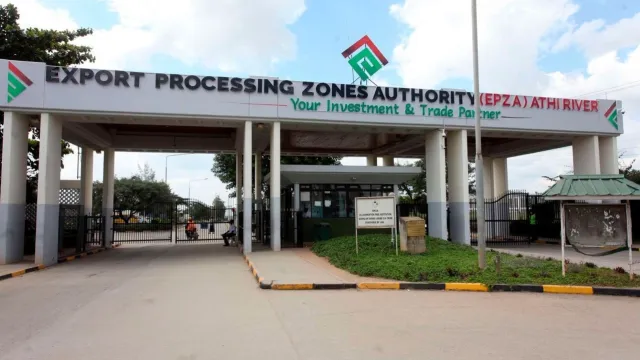
AGOA, which was started in 2000, offers qualifying nations from sub-Saharan Africa a tariff-free access to the U.S. market. The agreement was tailored to support economic development, promotion of the rule of law, while building stronger U.S-Africa ties.
Kenya's textile industries in export processing zones are poised to gain renewed access to the lucrative U.S. market after lawmakers extended the African Growth and Opportunity Act (AGOA) for three years, securing duty-free entry for qualifying exports until September 2028.
In an update on Wednesday, the Ministry of Trade said the U.S. House of Representatives has passed a Bill to extend the Agoa scheme, which came to a screeching close on September 30, last year.
Related
Kenya can be the Singapore of Africa — Meg Whitman
Kenya, Singapore to shore up trade ties in ICT, horticulture
"We aim to grow exports of additional products under the AGOA framework beyond textiles, ensuring that Kenya fully leverages this opportunity to create jobs and generate wealth," CS Lee Kinyanjui noted.
He added, "we are in discussions on a bilateral trade agreement that will cover other key sectors and further cement Kenya's long-standing partnership with the United States."
With the latest extension of Agoa trade preferences to 31 December 2028, Kenya and economies across Africa look forward to benefitting from duty-free access of their exports into the lucrative U.S. market.
The Bill by the United States House of Representatives also extends key AGOA provisions, such as duty-free apparel exports and the third-country fabric rule, giving countries such as Kenya the greenlight to ship garments manufactured using imported fabrics.
AGOA, which was started in 2000, offers qualifying nations from sub-Saharan Africa a tariff-free access to the U.S. market. The agreement was tailored to support economic development, promotion of the rule of law, while building stronger U.S-Africa ties.
“Our nation’s economic, strategic, and national security interests are front and center in AGOA. Think about it: This program strengthens our critical supply chains and helps us counter the harmful global influence of nations like China and Russia,” House Ways and Means Chairman Jason Smith, a Republican from Missouri, noted prior to the vote on Wednesday.
Smith highlighted the benefits for the U.S. from AGOA pack, stating that American companies have invested “$8 billion annually under AGOA” and that trading partners from Africa are increasingly opening their markets to U.S. agriculture.
Additionally, he highlighted that bill spells out tough eligibility criteria for participating countries with annual reviews modelled protect intellectual property, human rights, market access, and the fight on corruption.
This bill provides “a much-needed level of certainty and stability in the near term so that Congress can continue its work on future reforms to address and strengthen U.S. priorities.”
Previously, AGOA authorisations have typically covered periods longer than three years, but this bill represents a necessary compromise to revive the lapsed trade programme while lawmakers continue negotiating a more comprehensive update.
Reaching this stage has proven challenging, with reauthorisation efforts experiencing repeated delays and restarts in recent years, including an unsuccessful attempt in September just before AGOA expired.
Although the bill has now passed the House, the path forward remains uncertain. The Senate has historically shown strong support for AGOA, as demonstrated by a 2024 bipartisan bill introduced by Sen. Chris Coons (D-Delaware) and Sen. James Risch (R-Idaho), the ranking member of the Senate Foreign Relations Committee, which sought to extend the programme for 16 years.
However, there has been little progress in the Senate to date, prompting AGOA advocates to consider attaching the extension to a must-pass legislative vehicle in order to accelerate its passage.